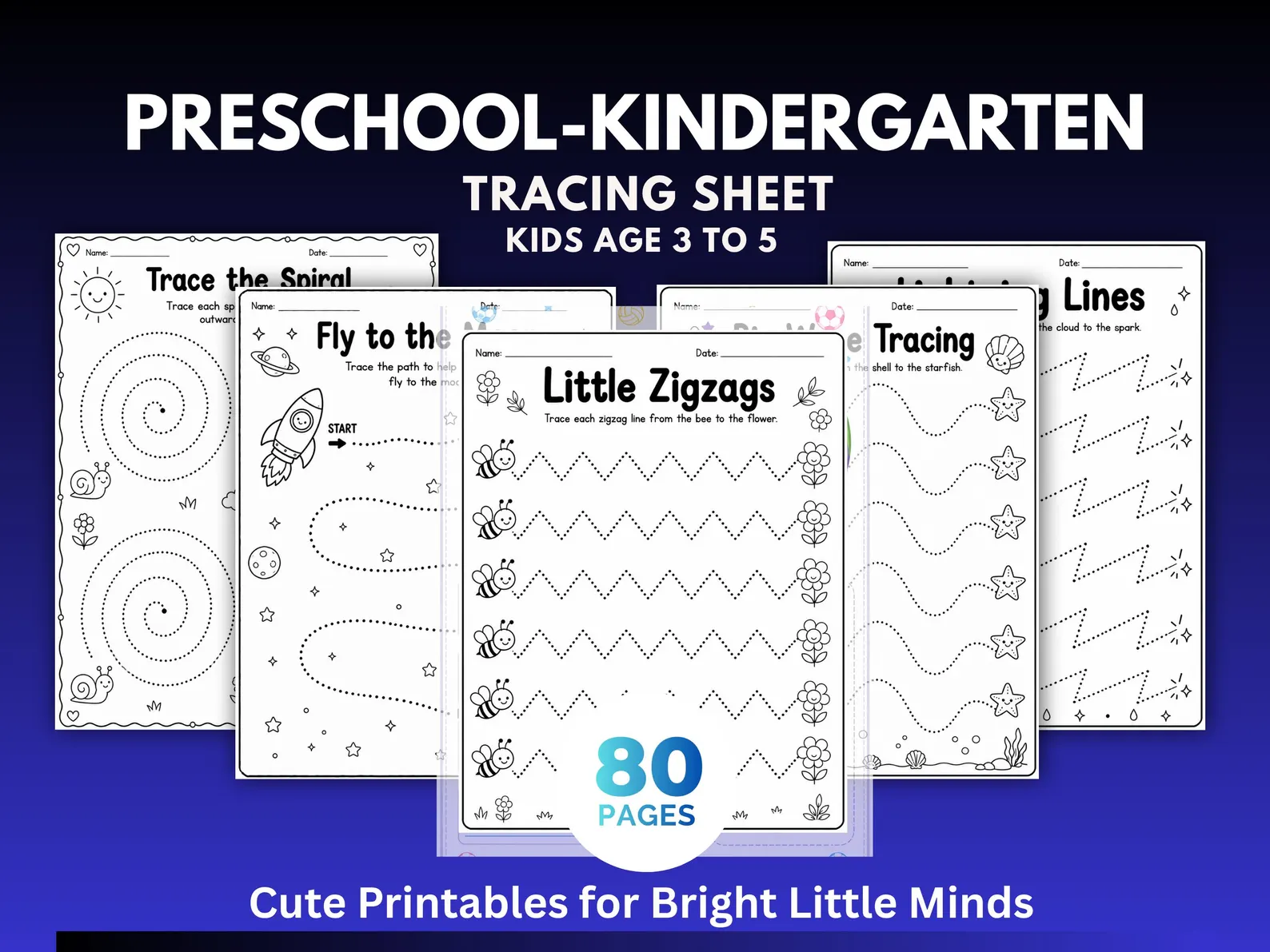
Before a child can write a letter, they have to be able to write a line — and that is not as automatic as it sounds. A straight vertical stroke, a sweeping curve, a smooth diagonal: each requires a different combination of hand movement, eye tracking, and pressure control. Letters are simply those lines arranged in specific ways.
This is why every serious handwriting program starts with tracing lines, not tracing letters. The lines are the vocabulary; the letters are the sentences. Here is what tracing lines does, the order to practice them, and how to build a pre-writing routine your child will actually enjoy.
The Five Line Types That Make Every Letter
Every letter and number in the English alphabet is built from a small set of line types. Master these five, and letter formation becomes a matter of arrangement rather than of learning twenty-six brand-new shapes.
| Line type | Examples in letters | Skill it builds |
|---|---|---|
| Vertical lines | l, t, 1, 4 | Top-to-bottom control |
| Horizontal lines | E, F, 2 | Left-to-right direction |
| Diagonal lines | A, K, V, 7 | Angle control and crossing |
| Curves and circles | C, O, S, 6 | Wrist rotation and flow |
| Combined strokes | B, D, 5, 9 | Switching directions mid-stroke |
What Tracing Lines Actually Trains
Tracing a line is more than a hand following a dotted path. It is a full coordination workout that builds the prerequisites of handwriting.
- Grip strength — the finger muscles that hold a pencil comfortably.
- Eye-hand coordination — the hand following what the eye sees.
- Directionality — practicing left-to-right, top-to-bottom, the way text flows.
- Pressure control — pressing enough to mark, softly enough not to tear.
- Stopping and starting — the restraint of beginning and ending a stroke on purpose.
The Pre-Writing Progression (Scribbles to Letters)
Children do not jump from scribble to letter. They pass through a predictable progression, and each stage matters. The Tracing Lines Worksheets Bundle, Preschool Printable PDF, Kindergarten Curriculum Learning, Pre Handwriting, Digital Download set is designed around this exact path.
| Stage | What it looks like | Typical age |
|---|---|---|
| Scribbling | Random marks in every direction | 1-2 years |
| Controlled scribbles | Back-and-forth, circular motions | 2-3 years |
| Vertical and horizontal lines | Consistent straight strokes | 2.5-3.5 years |
| Crosses and diagonals | Two-stroke intersections | 3-4 years |
| Circles and curves | Closed round shapes | 3-4 years |
| Pre-writing line tracing | Tracing lines in paths and mazes | 3-5 years |
| Letters and numbers | Forming real symbols | 4-6 years |
Fun Ways to Practice Lines Without a Worksheet
Line tracing does not have to happen on paper. Every one of these builds the same skills with less pressure.
- Salt tray lines — draw straight, curved, and zigzag lines in a tray of salt.
- Masking tape floor maze — walk the lines with your feet, then trace them with a toy car.
- Chalk on the driveway — giant lines, circles, and loops with big arm movements.
- Shaving cream — smooth lines across a tabletop, wiped and retried.
- Play-doh snakes — roll and arrange into lines, curves, and circles.
- Sandpaper lines — feel the texture while tracing over bumpy shapes.
How to Use Line Tracing Worksheets Well
The printable version is the bridge to real writing, and a few habits make it work better. Start each page with a quick finger trace before picking up the marker. Encourage one continuous stroke without lifting the pencil mid-line. And never skip the direction — left to right for horizontal lines, top to bottom for vertical ones, because that is the directionality your child will need for reading and writing.
Keep sessions short and praise the process: "You kept your line right inside the path the whole way!" is feedback a child can use.
Signs of Readiness for Letter Tracing
How do you know when line tracing is done and letter tracing can begin? Look for these signs: your child stays inside the lines most of the time, traces horizontal lines left to right, can draw a recognizable circle, and holds a pencil with a stable grip. When those four are in place, letters will feel like a natural next step.
If your child is not there yet, give it time and keep the line practice fun. Browsing the Tracing hub will keep you stocked with stage-appropriate ideas, and the Fine Motor Skills collection covers the hand-building play that supports everything.
Frequently Asked Questions
Why do children need to trace lines before writing letters?
Letters are combinations of lines — verticals, horizontals, diagonals, and curves. Tracing lines first lets a child master each stroke type without the extra load of letter recognition. It builds grip strength, direction, and control in their simplest form.
At what age should kids start tracing lines?
Between ages three and five, once a child can scribble with some control and hold a marker. Line tracing with wide, simple paths suits younger children; tighter paths and mazes suit older ones. Readiness signals matter more than exact age.
What is the difference between tracing lines and tracing letters?
Line tracing practices the individual strokes and motor control in isolation. Letter tracing adds symbol recognition and specific formation sequences on top. Lines come first precisely because they isolate the motor challenge.
How long should pre-writing practice take each day?
Five to ten minutes is plenty for a preschooler. Short daily practice builds the muscle memory handwriting needs, while long sessions cause fatigue and frustration. One or two pages a day beats a big weekly block.
Can tracing lines help older children who struggle with handwriting?
Yes. Older children with messy or slow handwriting often have gaps in these foundational motor skills. Returning to line and path tracing — even briefly — can rebuild grip, pressure control, and directionality, then transfer to letter formation.
The Bottom Line
Line tracing is the unglamorous foundation that real handwriting stands on. It builds the grip, direction, control, and confidence your child needs, in small steps that feel like play.
The Tracing Lines Worksheets Bundle, Preschool Printable PDF, Kindergarten Curriculum Learning, Pre Handwriting, Digital Download pack turns this foundation into a ready-made routine — preschool learning activities designed to move your child from wobbly marks to steady strokes, one line at a time.
Related Reads
Keep exploring with these helpful guides: