There is a moment in every child's early years when a scribble stops being a scribble and starts being a letter. Alphabet tracing worksheets are how most children get there — the dotted line, the guided arrow, the slow, wobbly first attempt at a capital A.
But tracing works best when it is more than just "follow the dots." In this guide you will learn how to introduce letter formation in the right order, how to read your child's readiness signals, and how to keep practice from turning into frustration — whether you are a parent at the kitchen table or a teacher at a pre-K center.
What Alphabet Tracing Actually Teaches
Tracing is often described as handwriting practice, but that undersells it. A good tracing page teaches four separate skills at once: letter recognition (the eye sees the shape), letter name (the mouth says it aloud), formation sequence (the hand learns the stroke order), and fine motor control (the muscles build strength).
Because those four skills reinforce each other, tracing is one of the most efficient learning activities you can offer a preschooler. Ten focused minutes of tracing a single letter does more for letter knowledge than an hour of passively pointing at flash cards.
Start With the Letters That Are Easy to Write
Handwriting readiness is not the same as letter recognition readiness. A child might recognize every letter and still not have the muscle control to write them. The fix is to introduce tracing in an order that matches hand development, not the alphabet song.
- Vertical and horizontal lines first: I, L, T, E, F, H — straight strokes are the easiest for small hands.
- Diagonal lines next: A, K, M, N, V, W, X, Y, Z — these need a bit more control.
- Curves last: C, O, G, Q, S, U and the rounded letters B, D, J, P, R — circles and arcs are the hardest for little writers.
- Within each group, start uppercase (big, simple shapes) before lowercase (smaller, more detail).
The Tracing Routine That Works
Saying the strokes aloud ("down, across, across") anchors the formation sequence in memory. Keep each session to one or two letters, and always stop while the child is still engaged.
- Step one — watch. You trace the letter while your child watches and names it.
- Step two — air trace. Your child "writes" the letter in the air with their finger, saying the stroke pattern aloud.
- Step three — on paper. Your child traces the dotted letters, starting at the star and following the arrows.
Uppercase, Lowercase, or Both?
Start with uppercase letters because their shapes are big, simple, and easy to distinguish. Then, as soon as a few capitals are solid, introduce their lowercase partners. Do not wait until all twenty-six capitals are perfect — perfection is not the goal, and your child will encounter lowercase letters constantly in the books you read together.
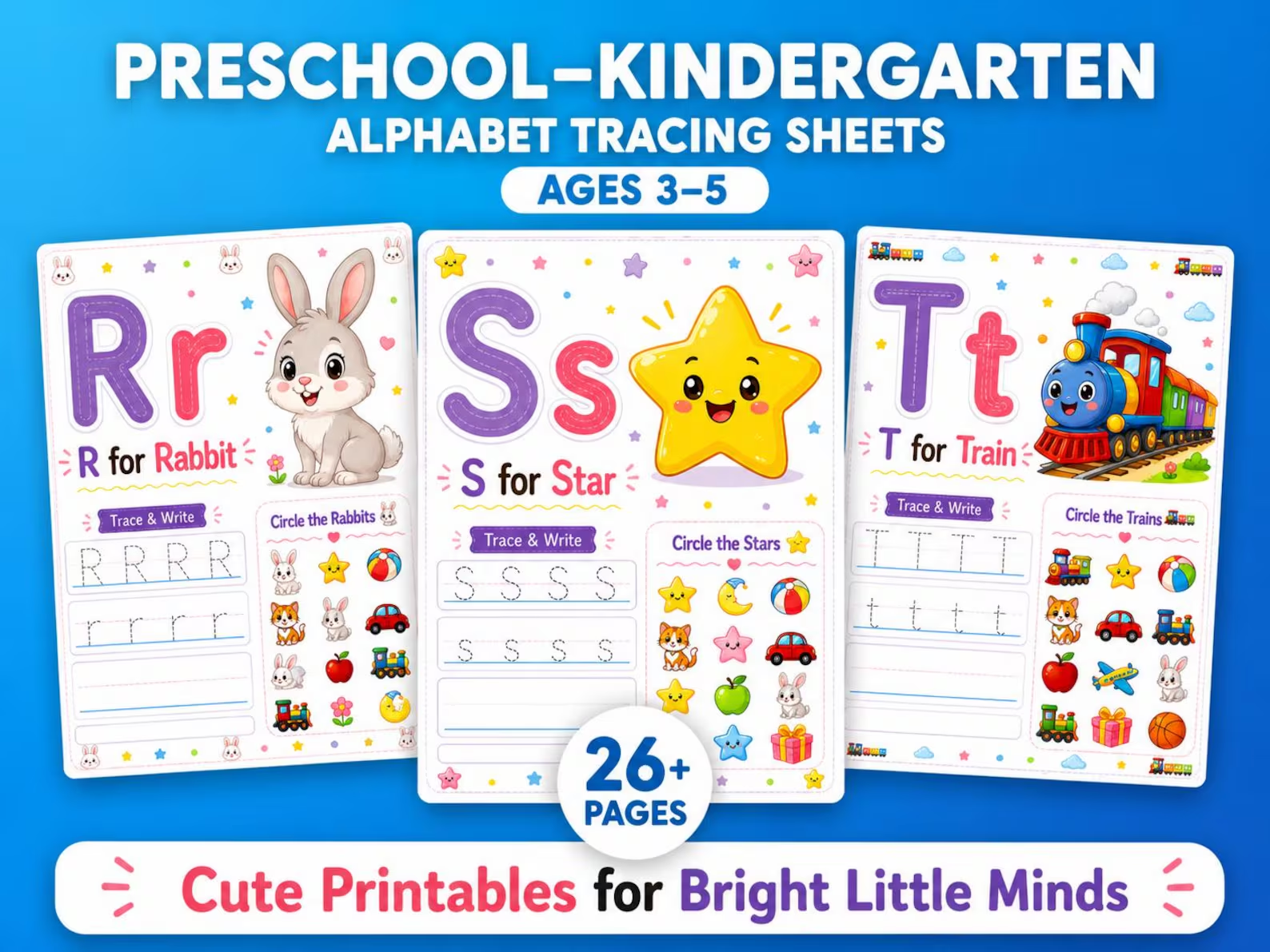
A printable pack that covers both is ideal, which is why the Alphabet Tracing Worksheets A–Z Printable | Preschool & Kindergarten Letter Tracing Practice | ABC Handwriting Activity for Kids | Dat It set includes uppercase and lowercase practice with trace-and-write activities on every page. Matching each capital to its lowercase form early prevents the "I only know the big letters" problem later.
Common Tracing Mistakes to Avoid
Most tracing problems are teaching problems in disguise. Here are the fixes that matter most.
| Mistake | What to do instead |
|---|---|
| Letting kids trace from bottom to top | Use arrow guides and model top-to-bottom strokes |
| Correcting grip mid-letter | Gently adjust before they start, not while they trace |
| Racing through multiple letters | One or two letters done well beat ten done badly |
| Only tracing, never writing | End each session with one freehand letter |
| Comparing to siblings or peers | Handwriting develops on its own timeline |
How to Build on Tracing for Real Handwriting
The transition from tracing to writing is a slow fade, not a switch. Use the "fade-out" method: the first letter on the page is fully dotted, the second is half-dotted, the third is blank with a starting star, and the last is completely free.
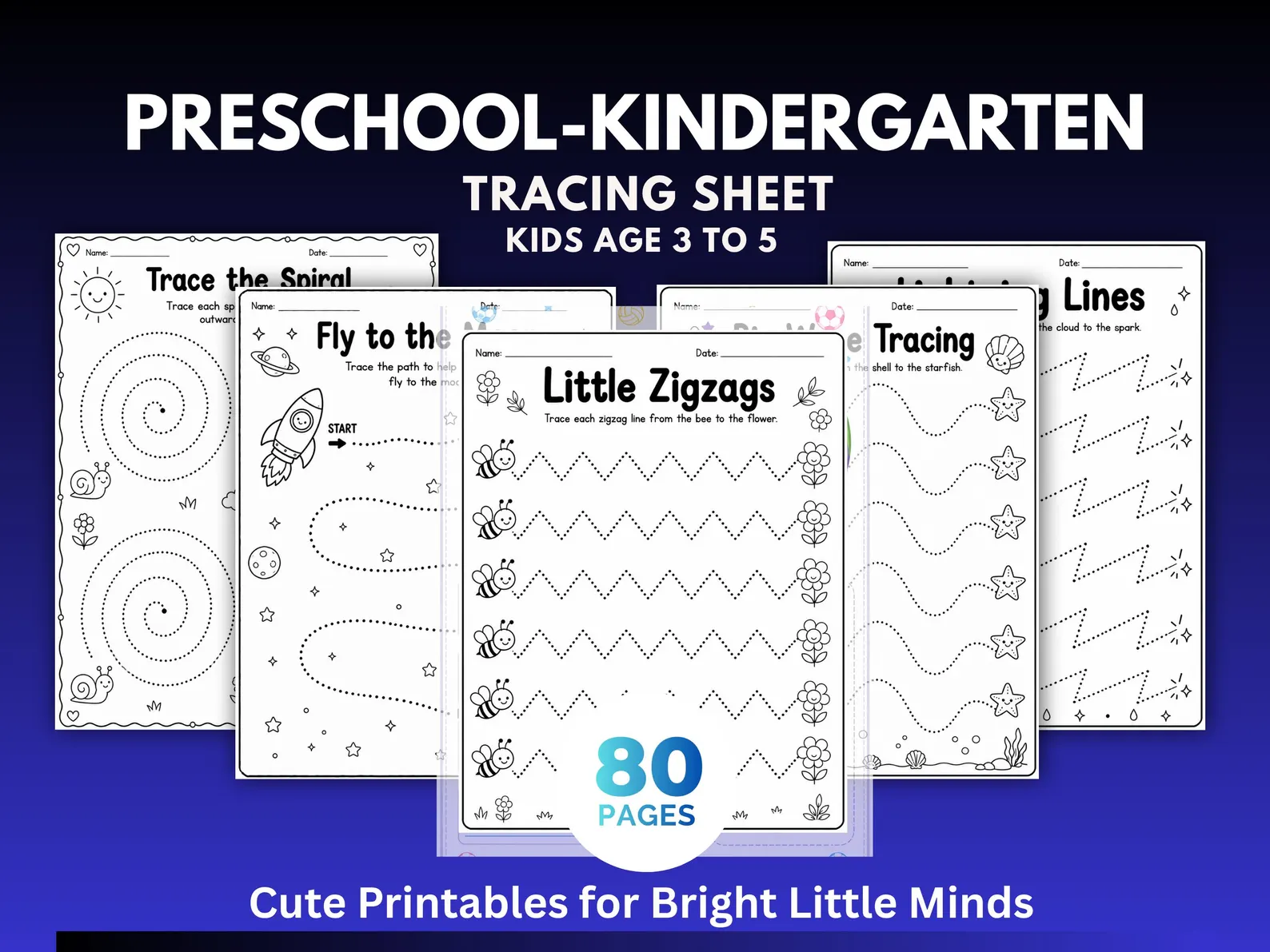
After freehand practice, move into Tracing and pre-writing lines, then into copying words the child cares about — their name first, then family names, then favorite animals. When writing means something, motivation takes care of itself.
What to Do When a Child Resists Tracing
Resistance is almost always a signal, not a problem. The child may be tired, the page may be too hard, or the activity may have become a chore. Give it a day or two and return with a different tool: tracing in a salt tray, tracing with a finger in shaving cream, or tracing giant letters with a paintbrush and water on the driveway.
You can also make the printable the reward rather than the requirement — a brand new Alphabet worksheet can feel like a treat when it arrives wrapped in enthusiasm instead of expectation.
Frequently Asked Questions
At what age should a child start tracing letters?
Most children are ready to begin simple tracing between ages 3 and 4, though readiness varies widely. Look for signs like a stable grip, interest in writing implements, and the ability to copy basic lines and circles. There is no rush — forcing tracing too early creates frustration, not skill.
Should I teach uppercase or lowercase letters first for tracing?
Uppercase first. Capital letters are bigger and made of simpler shapes, which suits children's developing fine motor control. Once several uppercase letters are comfortable, introduce the matching lowercase letters so children connect the two forms early.
How many letters should a child trace per day?
One or two letters per session is ideal for preschoolers, with each letter practiced a few times. A short daily session (five to ten minutes) beats a long weekly one. Quality of attention matters far more than the number of pages completed.
What's the difference between tracing and handwriting practice?
Tracing gives the child a guided path to follow, building motor memory of letter shapes. Handwriting practice means forming letters freehand. Good progression starts with tracing, fades the guides gradually, and ends with freehand formation — never jumping straight from tracing to writing words.
Can alphabet tracing worksheets be reused?
Yes, with a simple trick: place the page in a clear plastic sleeve or laminate it and use dry-erase markers. This lets children trace the same letters repeatedly — which is exactly what motor memory needs — without printing new pages.
The Bottom Line
Alphabet tracing is one of the most reliable bridges from scribble to letter. Taught in the right order, with the right tools and a light touch, it builds the recognition, the muscle memory, and the confidence your child needs for real handwriting.
The Alphabet Tracing Worksheets A–Z Printable | Preschool & Kindergarten Letter Tracing Practice | ABC Handwriting Activity for Kids | Dat It set gives you twenty-six uppercase and lowercase pages with trace-and-write activities and cute, kid-friendly illustrations — everything you need to make letter practice a daily five-minute ritual.
Related Reads
Keep exploring with these helpful guides: