Somewhere between "I can count to ten!" and the first wobbly handwritten number, every child passes through number tracing. It is a deceptively small milestone — a single digit drawn inside a dotted outline — but it quietly marks the start of written mathematics.
The problem is that most number tracing fails because of how it is taught, not whether the child is ready. Number tracing taught too early, too fast, or with the wrong tools turns a meaningful milestone into a battle. This guide walks you through the exact sequence — readiness, stroke order, daily routine, and real activities — that makes number tracing stick.
Why Number Tracing Is a Two-Layer Skill
Number tracing is really two skills stacked on top of each other. The first is number recognition: understanding that the shape 5 means "five things." The second is handwriting: the motor control to reproduce that shape. A child can be ahead on one and behind on the other, and that mismatch is where most frustration comes from.
So the very first job of any number tracing program is to check both layers separately. Can your child count objects one-to-one? Can they name a number when they see it? And can they draw a circle or a straight line on demand? Each of those questions points to a different next step.
Readiness: Is Your Child Actually Ready to Trace?
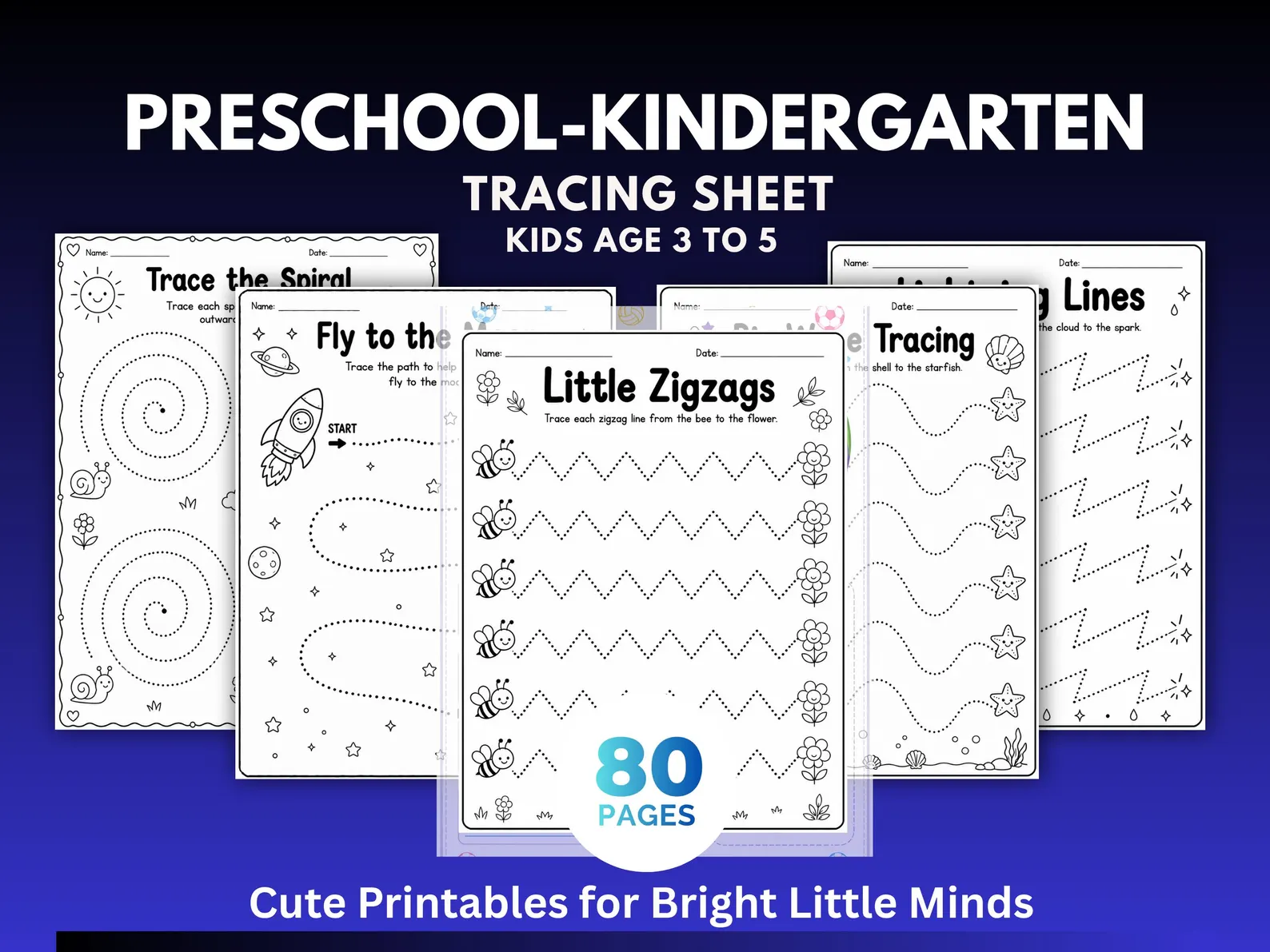
If those three are in place, number tracing will go smoothly. If not, spend a month on pre-writing lines and counting play — the Tracing Lines Worksheets Bundle, Preschool Printable PDF, Kindergarten Curriculum Learning, Pre Handwriting, Digital Download set is perfect for that stage — and revisit. Starting before readiness is the single most common cause of tracing meltdowns.
- They can copy simple marks — a circle, a vertical line, a cross — without help.
- They hold crayons and markers with a comfortable, stable grip.
- They show interest in numbers, counting, or writing, even if only briefly.
The Right Stroke Order for Every Number
Here is the cheat sheet for the trickier digits: 2 starts at the top and sweeps right then down and across; 5 goes down, around, and across; 8 is a continuous figure-eight; 9 is a circle then a short straight tail. Big, bold numbers on a Printable Product page give children the space to practice each shape without cramping.
- Rule one — write top to bottom. Always start at the top of the number and move downward.
- Rule two — one stroke wherever possible. Most digits can be written without lifting the pencil; that flow builds speed and comfort.
The Daily Number Tracing Routine
Number tracing works on a rhythm, not a marathon. Here is the routine that gets real results without tears.
| Time | What to do | Why |
|---|---|---|
| Warm-up (2 min) | Count objects or clap a number | Connects the digit to real quantity |
| Teach (3 min) | You trace the number, child air-traces it | Models the stroke order clearly |
| Practice (5 min) | Child traces big, bold numbers | Builds motor memory with room to move |
| Free write (2 min) | Child writes the number on their own | Tests what actually stuck |
| Celebrate (1 min) | A sticker, a high-five, a dot to color | Makes practice something to repeat |
Six Activities That Reinforce Number Tracing
Tracing pages are the anchor, but the surrounding activities are what turn a traced 3 into a known 3. Rotate these alongside your printable practice.
- Salt tray numbers — trace digits in a tray of salt with a finger.
- Number play-doh — roll dough into digit shapes (bonus hand strength).
- Sandpaper numbers — feel the bumpy shape, then trace it on paper.
- Counting connection — every time you trace a 4, place four beads beside it.
- Number hunt — search a page of mixed digits for today's number.
- Big-body numbers — write numbers in the air with giant arm movements.
Common Number Tracing Problems and Fixes
Meet the three most common issues and their practical fixes.
| Problem | The fix |
|---|---|
| Writing 2 and 5 backwards | Teach with memory anchors ("2 slides, then sits") and slow down |
| Mirror-writing numbers | Normal until age 6-7; practice directionality with arrows |
| Cramped, tiny numbers | Use big, bold tracing pages and a thick marker |
| Refusing to trace | Go back to sensory play; make it short and fun |
| Skipping the "hard" numbers | Revisit 8 and 9 last, with extra repetition and patience |
From Tracing to Number Sense
The end goal of number tracing is not perfect digits — it is a child who understands that numbers mean amounts. Each tracing session is a chance to say "this is the shape for four" while four objects sit beside the page. Keep that pairing going, and your child will walk into kindergarten able to write numbers and know what they mean.
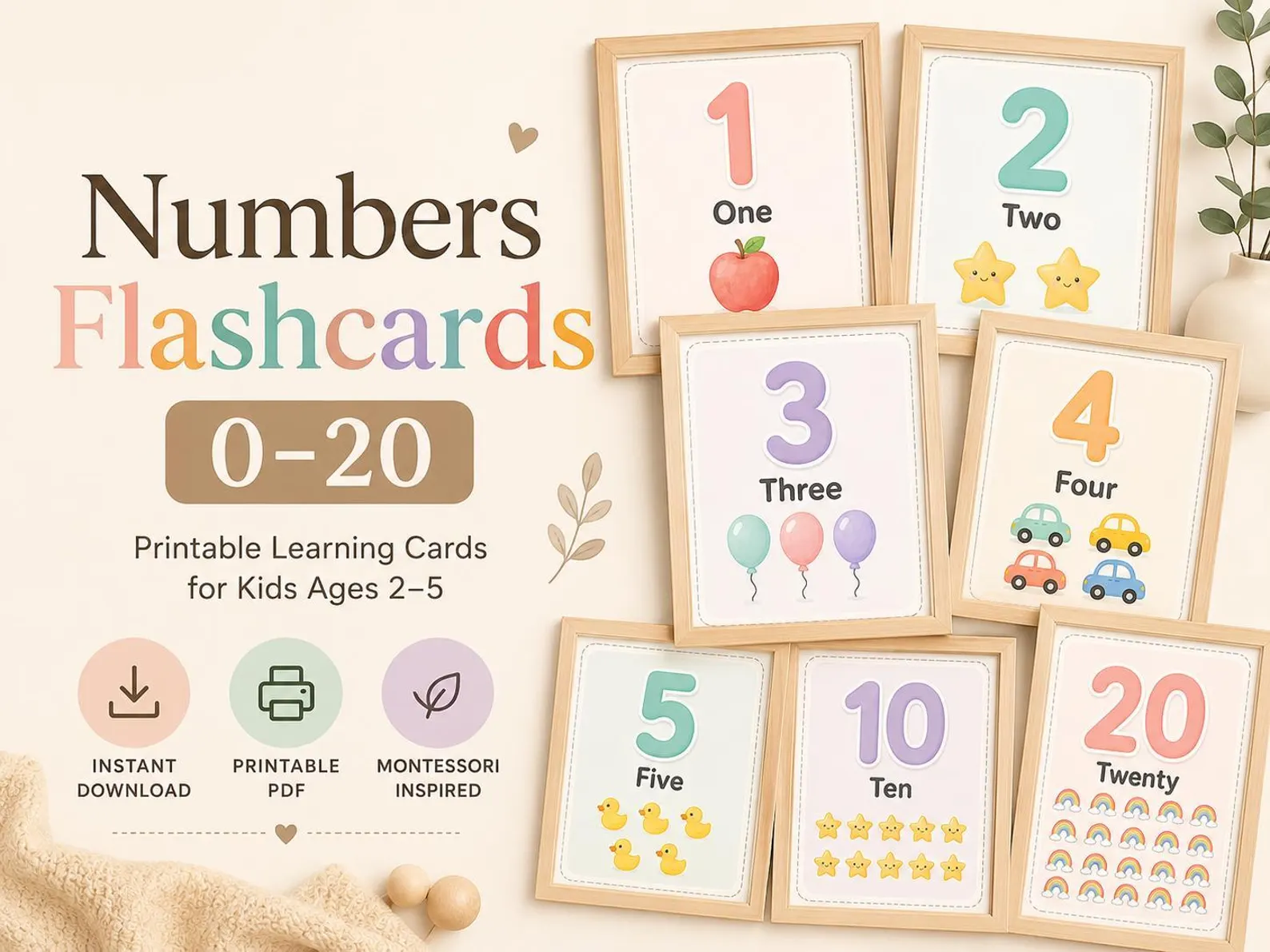
When tracing feels easy, graduate to writing numbers freehand, then to simple counting and one-to-one activities. For more early math ideas, browse the Numbers hub or the Early Learning collection.
Frequently Asked Questions
At what age should kids start tracing numbers?
Most children are ready between three and four years old, but readiness signals matter more than age: they can copy basic shapes, hold a marker comfortably, and show interest in numbers. Starting a few months late is never a problem; starting too early creates frustration.
How is number tracing different from number recognition?
Number recognition is recognizing and naming the digit when you see it. Number tracing is forming the digit by hand. They develop in parallel but at different paces — a child can recognize all numbers before being able to trace more than a couple.
How many numbers should a child trace per day?
One number per day, a few times each, is plenty for a preschooler. A five-to-ten minute daily session beats a long weekly drill. The goal is confident repetition of one shape, not a race through all ten.
What comes after number tracing?
Freehand number writing, then counting and one-to-one correspondence, then simple addition and comparing quantities. Number tracing is the handwriting foundation for all of it.
Are number tracing worksheets good for kindergarten prep?
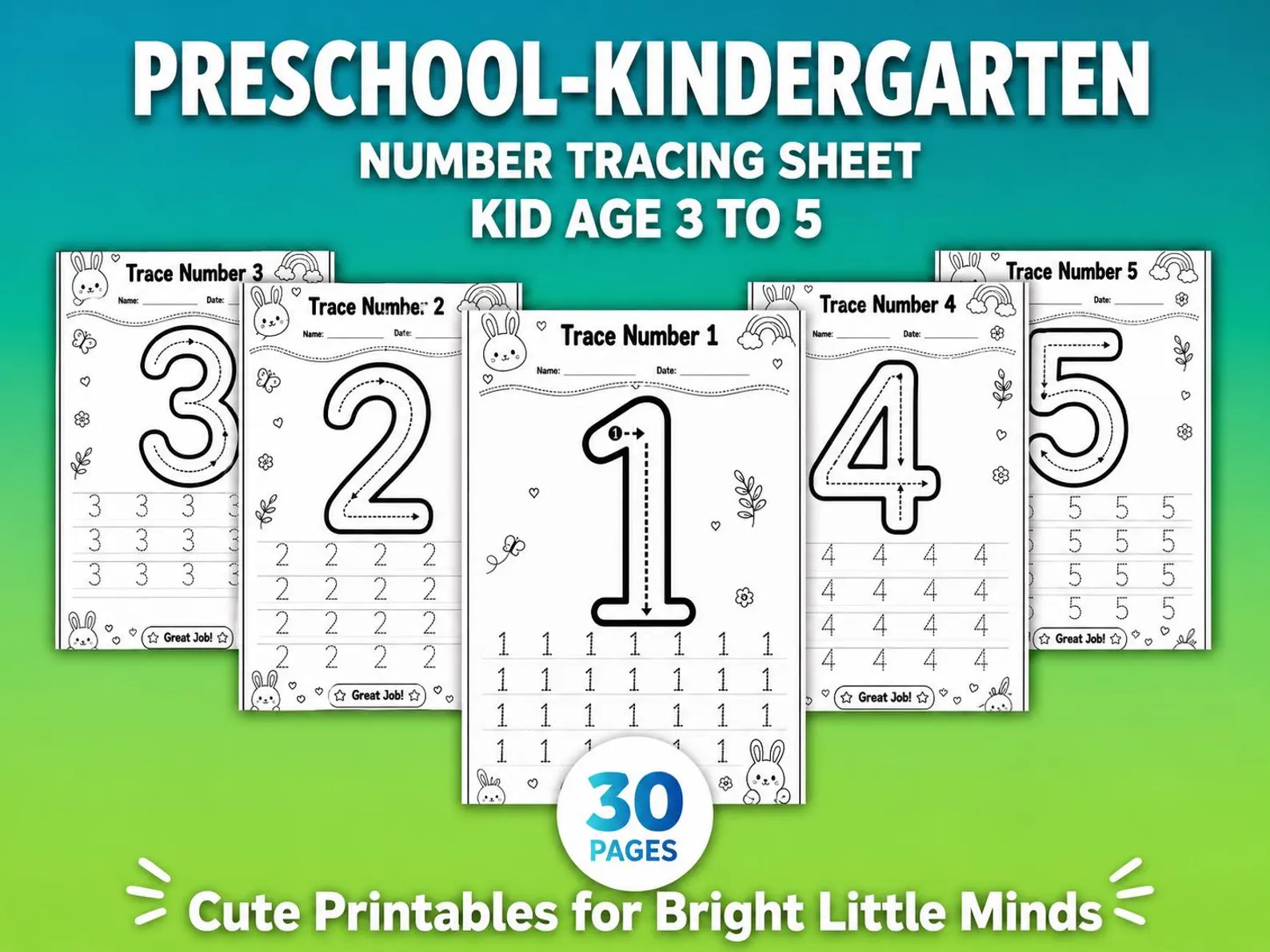
Excellent — writing numbers and understanding what they represent are both kindergarten-readiness skills. A set with big, bold numbers and cute designs, like the number tracing worksheets pack, gives preschoolers the practice they need in a friendly format.
The Bottom Line
Number tracing is a milestone that connects a child's voice ("five!") to a symbol they can write themselves. Taught in the right order, at the right time, with a gentle daily rhythm, it builds both the handwriting and the number sense that all early math depends on.
The Printable Product pack gives you thirty-plus pages of big, bold number practice with cute preschool-friendly designs — a ready-made daily routine you can start tonight.
Related Reads
Keep exploring with these helpful guides: