A printable matching game might be the best value in early learning: one page of pictures, a pair of scissors, and you have an activity that builds focus, memory, vocabulary, and fine motor control — and that children will ask to play again and again.
Below are fifteen matching game ideas organized by type, from the simplest picture pairs to memory challenges and concept matching. Print, cut, and play your way through the list.
How to Prepare Printable Matching Games (Print Once, Play Forever)
A little setup turns any printable into a lasting game. Print on cardstock for stiffness, or laminate regular paper before cutting. Use a paper cutter or scissors and keep pieces in a zipped bag or envelope. For matching worksheets that use drawn lines instead of cards, slide the page into a sheet protector and use a dry-erase marker — reusable forever.
Picture Pair Games (Ages 2-3)
The simplest level: two identical pictures, laid face up. Great for the youngest players.
- Face-up pair find — lay out pairs, find the two that match.
- Match to the board — place each card on its matching outline on a board.
- Draw a line — connect each pair on a printed worksheet.
- Color pairs — match identical pictures that differ only by color.
- Big and little — match the big version to the little version of the same picture.
Memory Games (Ages 3-5)
Flip-and-match memory builds working memory as well as visual discrimination. Start small.
- Classic memory — flip two cards, keep the pair if they match.
- Fewer cards first — start with three pairs, add more as your child wins.
- Talking memory — name each card as you flip it; naming boosts recall.
- Match and tell — after matching, say what the picture is and one feature of it.
- Memory race — how many moves does it take? Try to beat your own record.
Concept Matching (Ages 3-5)
Concept matching connects pictures to categories, quantities, or features — the bridge to real thinking.
- Match object to shadow — pair each picture with its silhouette.
- Match animal to home — the dog to the doghouse, the bee to the hive.
- Match numeral to quantity — the number 5 to five objects.
- Match color to item — red card to the red apple.
- Match shape to object — the circle to the round clock.
Why Matching Games Build More Than Memory
Beneath the fun, matching games are doing serious developmental work. The pointing, grasping, and placing of cards strengthen fine motor control. The search-and-compare loop trains attention and visual discrimination — the very skills behind reading. And naming cards out loud builds vocabulary and language.
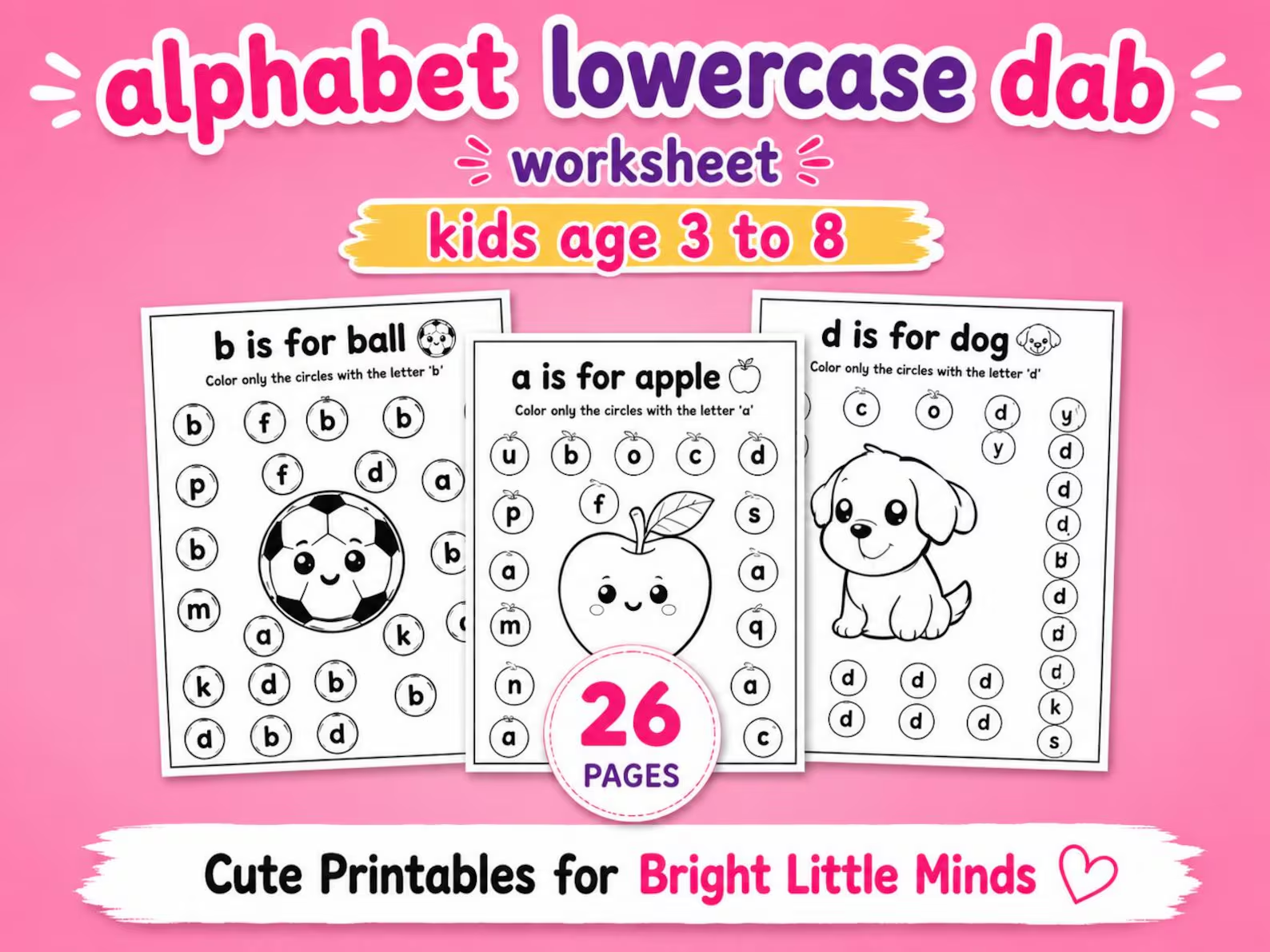
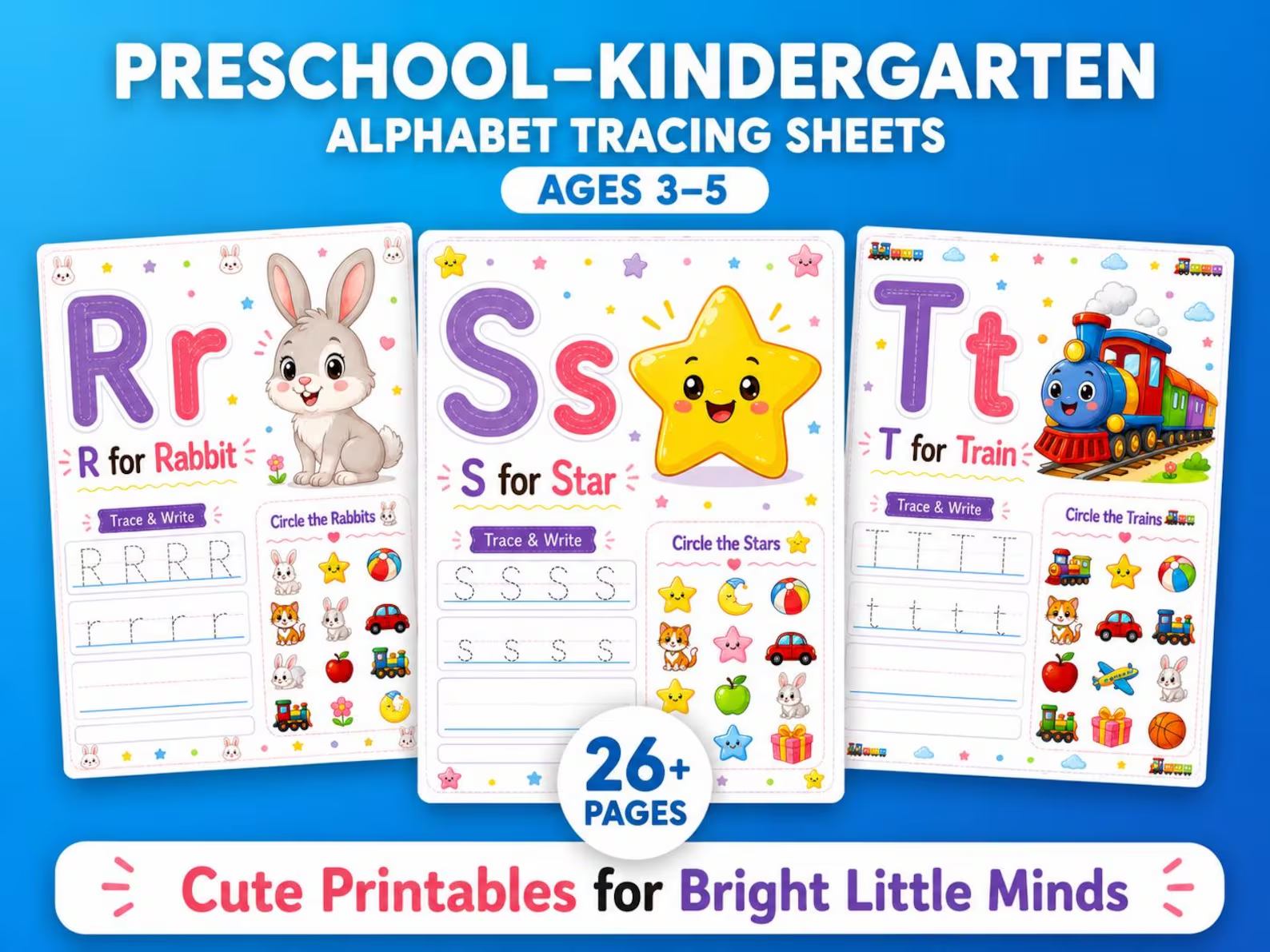
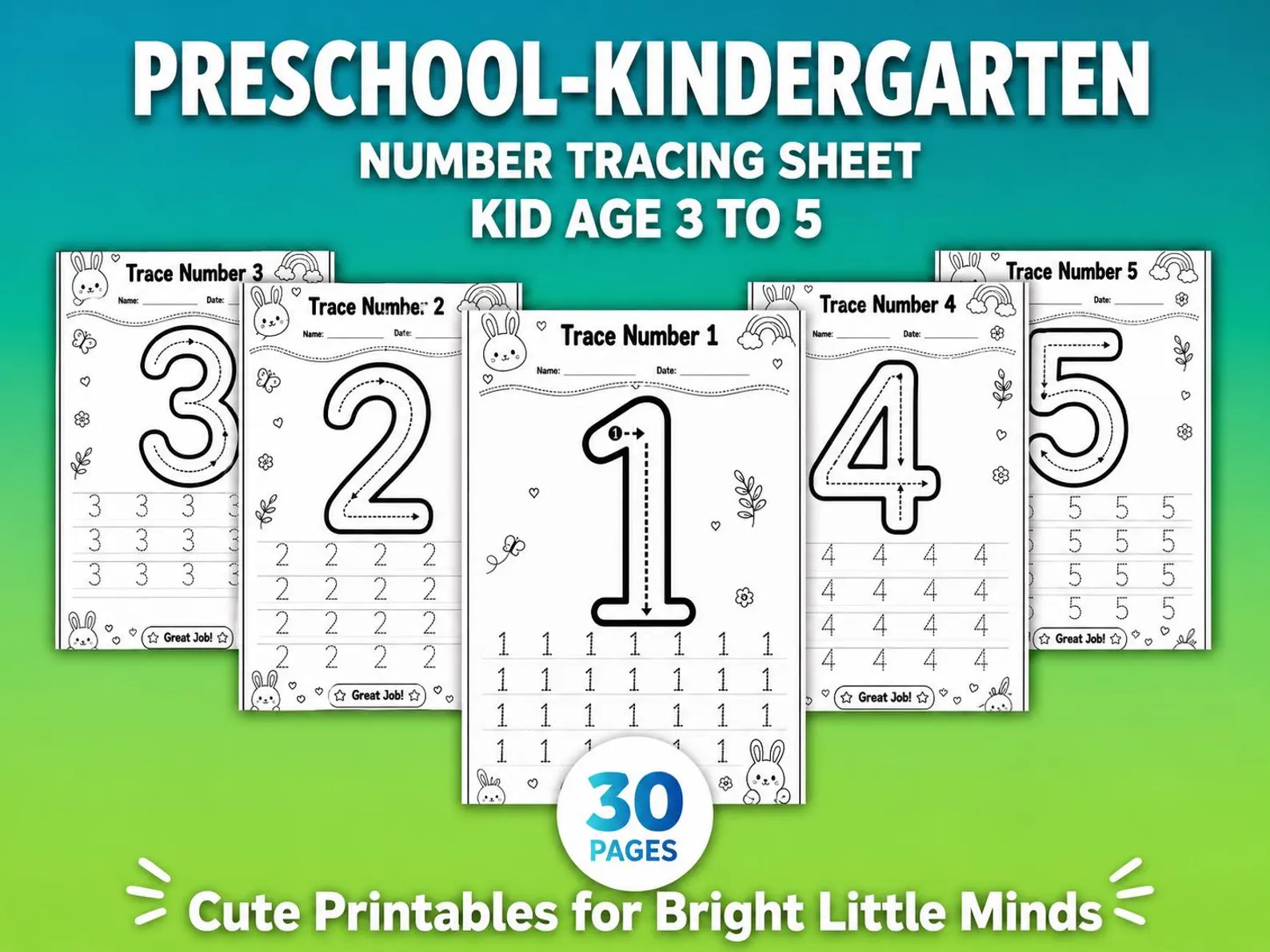
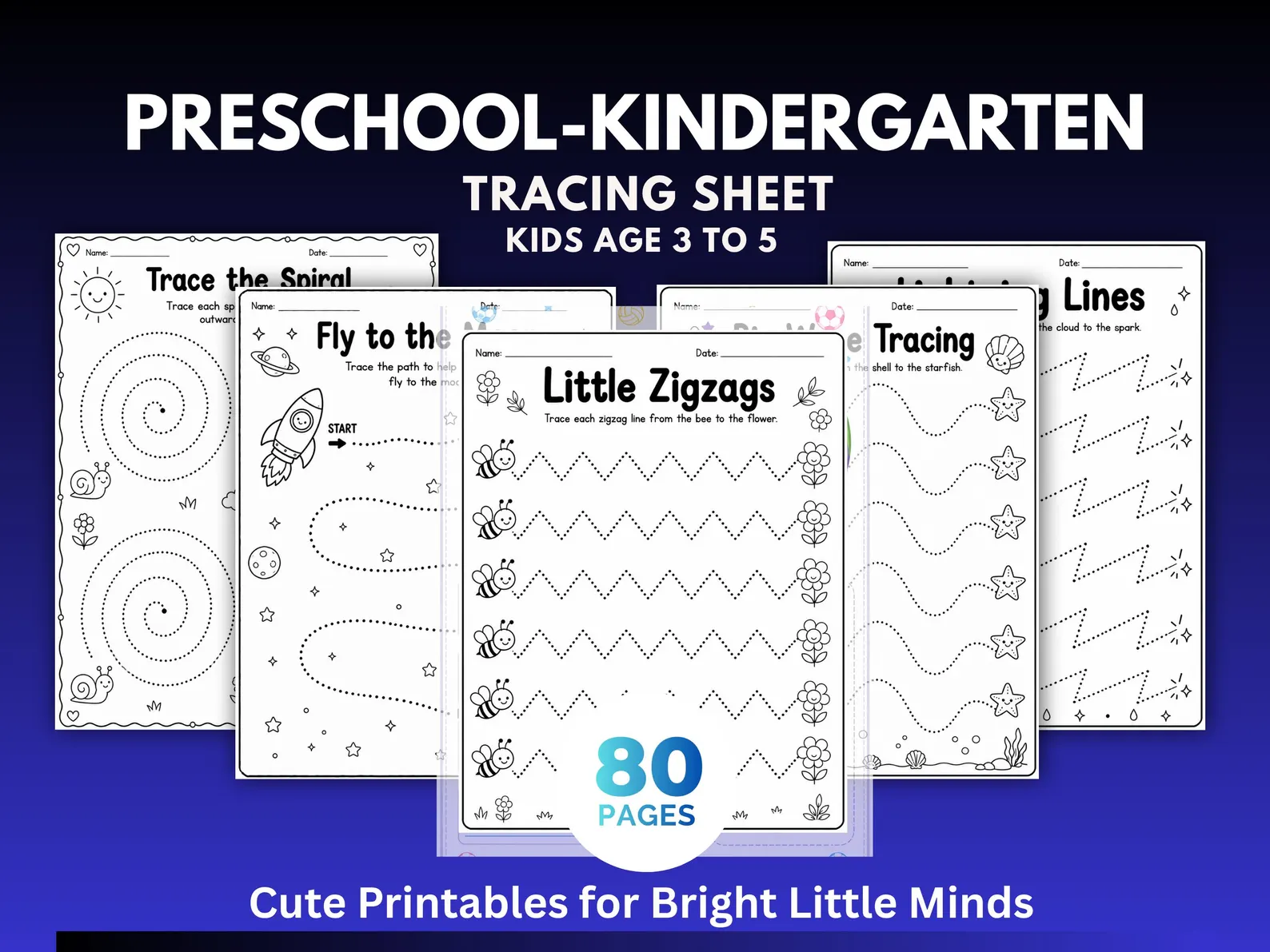
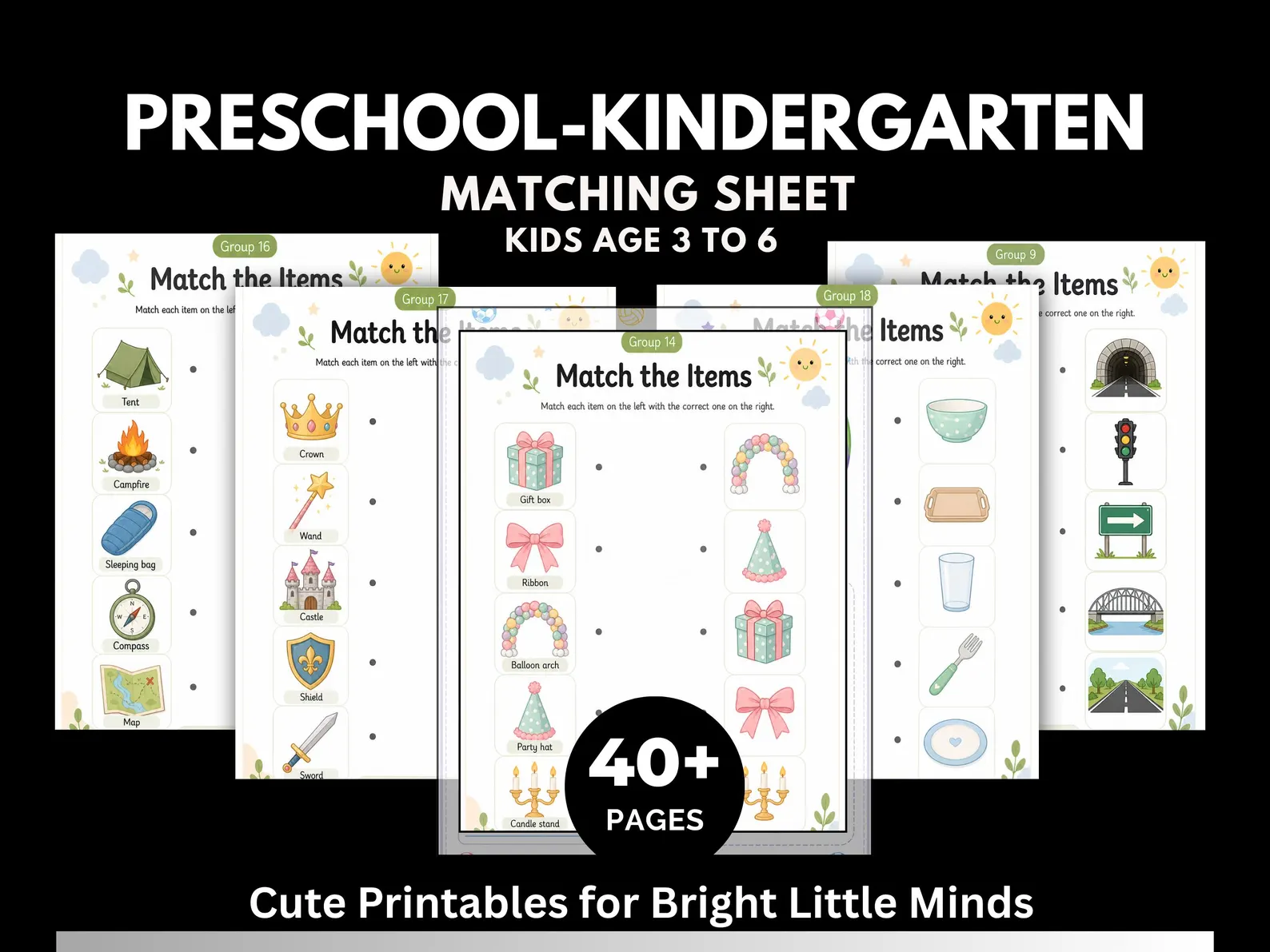
The Printable Matching Worksheets, Kindergarten Learning Activity, Match the Picture, Educational Pages, Homeschool , Busy book, 40+ PDF set takes this further with forty-plus pages of picture, object, and concept matching, ready to print at home in high resolution.
A Weekly Matching Game Rhythm
You do not need a complicated plan. Here is a simple weekly rhythm to keep matching fresh.
| Day | Game | Why |
|---|---|---|
| Monday | Face-up pair find | Easy warm-up, immediate wins |
| Tuesday | Classic memory (4 pairs) | Memory workout |
| Wednesday | Match-to-board worksheet | Fine motor + paper skills |
| Thursday | Concept matching | Thinking and vocabulary |
| Friday | Favorite repeat | Consolidation through joy |
Making Matching Games Harder Over Time
As your child masters a level, nudge the difficulty: use more cards, choose look-alike pictures (two similar dogs), hide the matches face-down, or move from identical to concept matching. The goal is a gentle edge — challenging enough to engage, easy enough to win. When a game becomes boring, it has done its job; move up.
For the full progression of matching skills and more printable ideas, visit the Preschool Learning hub and the Early Learning collection.
Frequently Asked Questions
How do I make printable matching games last?
Print on cardstock or laminate before cutting, store pieces in a zipped bag, and use sheet protectors with dry-erase markers for worksheet-style pages. A little preparation turns a printable into a game that lasts for years.
What age are matching games appropriate for?
Face-up picture pairs work from about age two, memory games from three, and concept matching from three to five. Every level of matching has an age-appropriate version — start where your child is and move up gradually.
How many pairs should a memory game use?
Start with three pairs for a new player and add one or two pairs as your child succeeds. Six to eight pairs is plenty even for skilled preschoolers. Fewer cards with confident wins beats more cards with frustration.
Do matching games need to be competitive?
No. For young children, cooperative and self-directed matching is better. Play "how many moves to finish?" against your own record rather than against each other, and let the child lead. Competition comes naturally later.
Can matching games help a child with attention issues?
Matching games are genuinely useful for practicing attention in a low-pressure way. The short, self-contained search loop is achievable for easily distracted children, and success builds the stamina for longer tasks. Keep sessions short and praise the looking, not just the winning.
The Bottom Line
Printable matching games are a complete early-learning activity hiding in a sheet of paper. They build memory, focus, vocabulary, and fine motor control, and they only need scissors and a few minutes to set up.
The Printable Matching Worksheets, Kindergarten Learning Activity, Match the Picture, Educational Pages, Homeschool , Busy book, 40+ PDF pack gives you forty-plus high-resolution matching pages in A4 — from picture pairs to concept matching — so you always have the right game at the right level ready to print.
Related Reads
Keep exploring with these helpful guides: