If you have ever watched a child trace a number and thought, "Cute, but is this actually math?" — you are not alone. Number tracing looks like handwriting practice, and handwriting practice it certainly is. But look closer, and tracing is doing something far more important: it is wiring number sense into a young brain.
The link between writing numbers and understanding them is stronger than most parents realize. In this article, we look at exactly what number tracing builds — from working memory to math confidence — and how to make the most of those ten minutes a day.
Tracing Builds Number Sense, Not Just Handwriting
Number sense is the ability to understand what numbers mean, how they relate, and how to work with them mentally. It is the foundation of all later math, and it is built long before formal arithmetic. Tracing a 7 while counting seven objects creates a physical, visual, and verbal connection between the symbol and the quantity — which is precisely what number sense is made of.
Every time your child traces a digit and you pair it with a count, you are not teaching handwriting. You are teaching the very idea of seven-ness.
The Working Memory Workout
Writing a number is a surprisingly demanding cognitive task. The child must hold the shape in their mind, remember the sequence of strokes, control the pencil, and keep track of where they are on the page — all at once. That juggling is exactly what working memory is for, and like any muscle, it gets stronger with use.
Tracing is a gentle version of this workout: the dotted outline reduces the demand while still exercising the memory loop. It is the ideal difficulty level for young children who are not yet ready to write from scratch.
Hands-On Learning Sticks Better
Young children learn through their bodies. A number they have traced, built in play-doh, or drawn in a salt tray is a number they have experienced, not just seen. Multisensory practice creates more pathways to the memory and makes numbers far easier to recall later.
This is why the most effective number activities combine tracing with counting objects, tactile surfaces, and gross-motor movement. The Printable Product provide the written practice, and the ideas below supply the rest of the sensory loop.
Writing Numbers Reinforces Reading Them
There is a two-way street between forming a number and recognizing it. Children who practice writing digits tend to recognize those digits faster and more reliably. The motor memory of producing a 3 sharpens the visual memory of what a 3 looks like — including telling it apart from its tricky neighbors like 8 and 9.
Recognition speed matters because it is a gate to everything else. A child who can instantly name a digit can focus mental energy on counting and comparing, not on deciphering the symbol.
Confidence That Carries Into Kindergarten
Math anxiety rarely starts at a blackboard. It starts at kitchen tables, in small daily moments where a child feels behind or confused. Number tracing is the opposite of that experience: it is doable, repeatable, and visibly improving. Page by page, a child accumulates proof that they can do math.
That quiet confidence — "numbers are my thing" — predicts engagement with math for years to come, often more than early arithmetic skill itself.
How to Get the Full Benefit From Every Tracing Session
To turn tracing from handwriting practice into genuine math building, use this checklist.
| Do this | What it adds |
|---|---|
| Count objects alongside the digit | Connects symbol to quantity |
| Say the number name and count the strokes | Verbal and motor memory |
| Compare: "is 3 more or less than 4?" | Builds relational thinking |
| Trace on different surfaces | Multisensory retention |
| Count forward and backward from the digit | Strengthens the number line |
When Number Tracing Becomes Freehand Writing
As tracing becomes automatic, fade the guide. Let your child write numbers freehand in chalk on the sidewalk, on a whiteboard, or in a blank notebook — any place where wobbly digits are fine. The wobble is practice, not failure. Soon the wobbles shrink and the numbers read clearly, and you will have watched handwriting and number sense grow together.
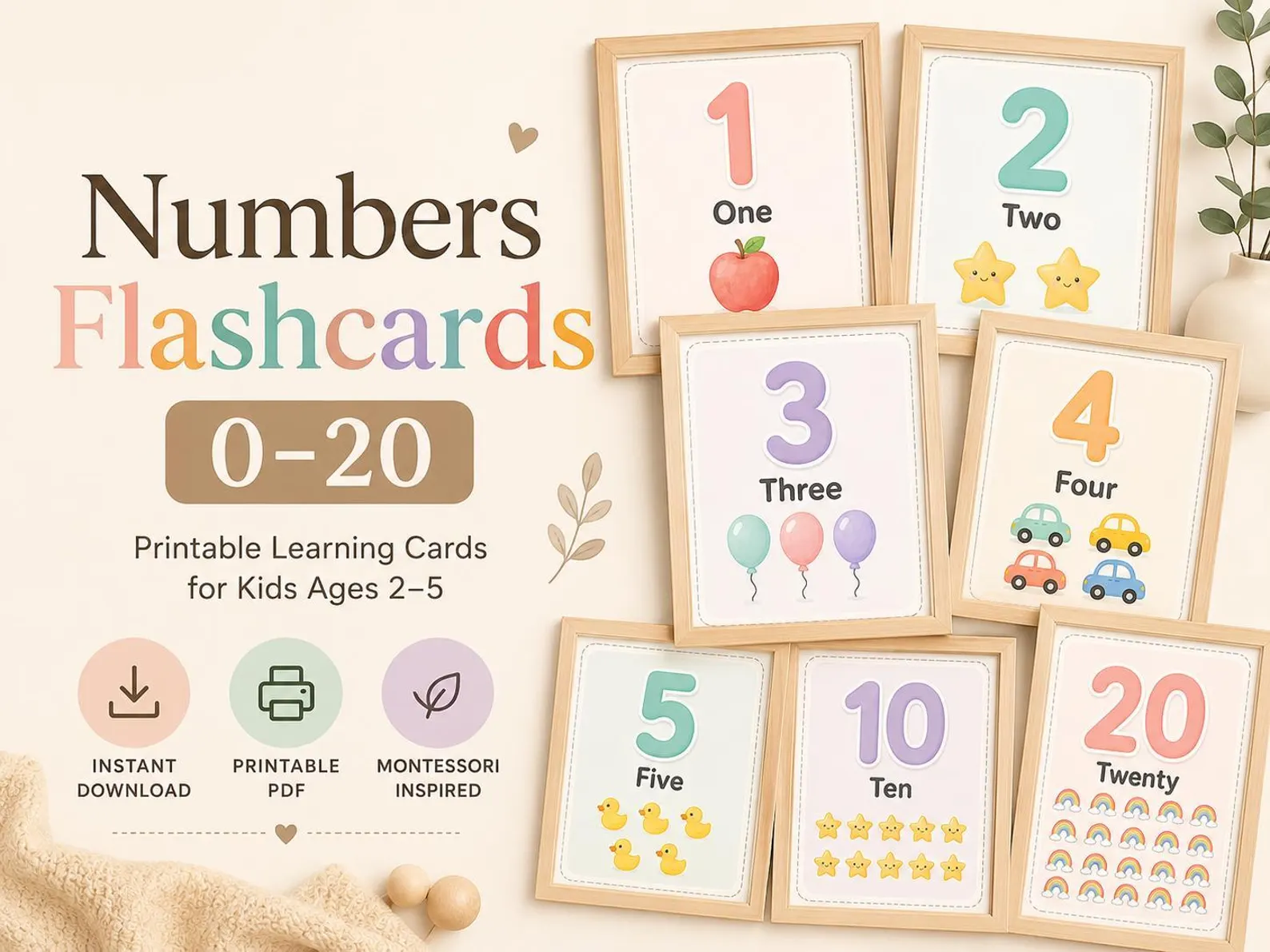
For the whole early math picture — counting, one-to-one, and number recognition — pair tracing with the Numbers resources and the Numbers 1-20 Flash Cards Printable | Preschool Learning | Home Counting Activity | Toddler Math Flashcards | Kindergarten Printable | PDF flash card set for quick, playful review.
Frequently Asked Questions
Is number tracing really necessary for math?
Not strictly necessary, but highly valuable. The combination of motor, visual, and verbal practice that tracing provides builds number recognition speed and confidence faster than recognition alone. It is an efficient foundation for the mental math that follows.
What age should number tracing start?
Typically between ages three and four, once a child can copy basic shapes and shows interest in numbers. Age matters less than readiness — watch for stable grip, interest, and the ability to draw simple marks.
How long should number tracing practice last?
Five to ten minutes a day is ideal for preschoolers. Short, consistent, enjoyable sessions build skill and confidence without burnout. One digit per session, practiced a few times, is plenty.
Does tracing help with counting, or just writing?
Both. When tracing is paired with counting objects and number names, it directly supports counting and one-to-one correspondence. The writing practice is a bonus on top of the number sense it helps build.
What if my child traces numbers backwards?
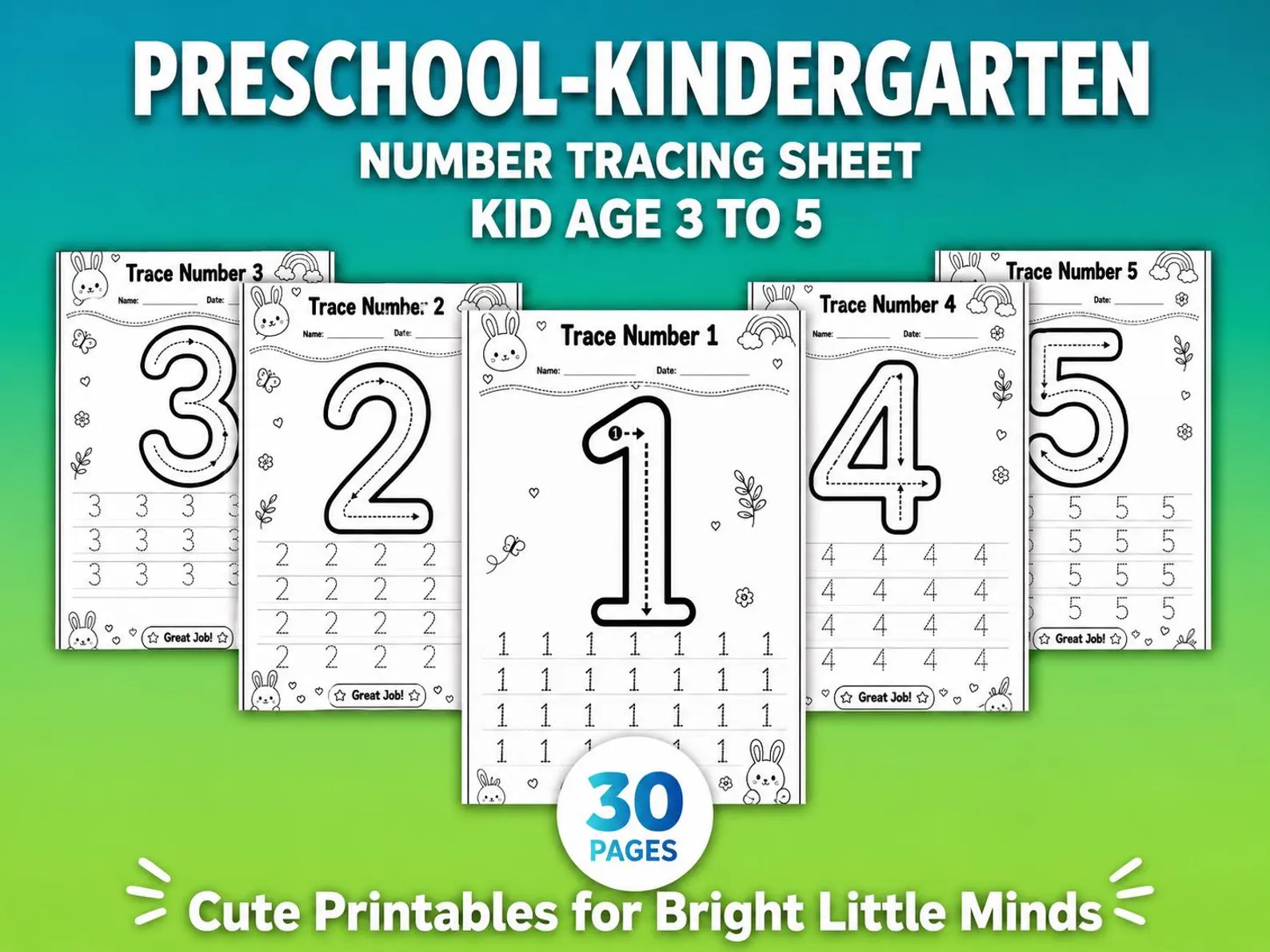
Mirror writing is normal until age six or seven and usually resolves with practice. Use arrow guides, slow down, and avoid pressure. Big, clear tracing pages with directional cues help most children self-correct within a few months.
The Bottom Line
Number tracing earns its place in the preschool routine because it works on so many layers at once: handwriting, recognition speed, working memory, number sense, and confidence. It is one of the few activities where motor practice and math understanding grow hand in hand.
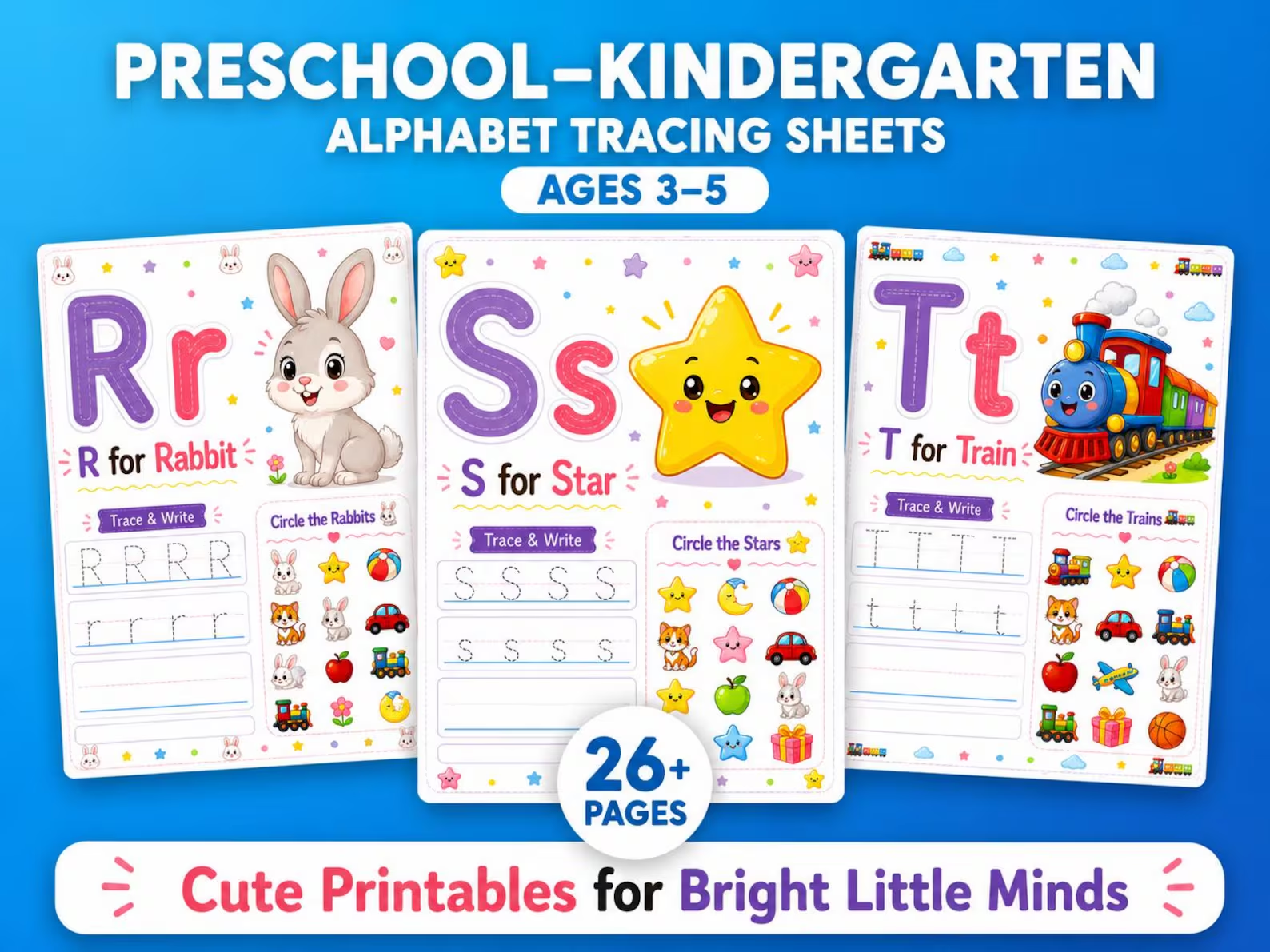
Give your child a strong start with the Printable Product pack — thirty-plus pages of big, bold, kid-friendly numbers — and watch handwriting and early math develop together, ten happy minutes at a time.
Related Reads
Keep exploring with these helpful guides: