Ask a group of preschoolers to name the capital A and they will do it in a heartbeat. Ask them to point to a lowercase a and you will often get a long pause. Lowercase letters are where reading really happens — nearly every word on every page is written in lowercase — yet they are almost always the harder ones for young children to learn.
The good news? Lowercase letters are not harder because of anything wrong with your child. They are harder because most of us teach the alphabet as one block of twenty-six big letters and expect the small ones to come along for the ride. In this guide, you will learn a step-by-step approach to lowercase letter recognition using dot markers, dabbing worksheets, and the kind of playful repetition that keeps three- and four-year-olds asking for more.
Why Lowercase Letters Matter More Than You Think
Here is a number worth keeping in your back pocket: roughly 95% of the letters children encounter in real books are lowercase. When your child finally learns to read, it is the lowercase b that shows up on the page — not the capital B. If you only ever practice the uppercase alphabet, you are practicing the set of letters your child will use least.
That is not to say uppercase letters are useless. They are easier to distinguish from one another, which is why they make a great starting point. But a strong early literacy routine moves quickly toward lowercase recognition so the bridge to reading is short.
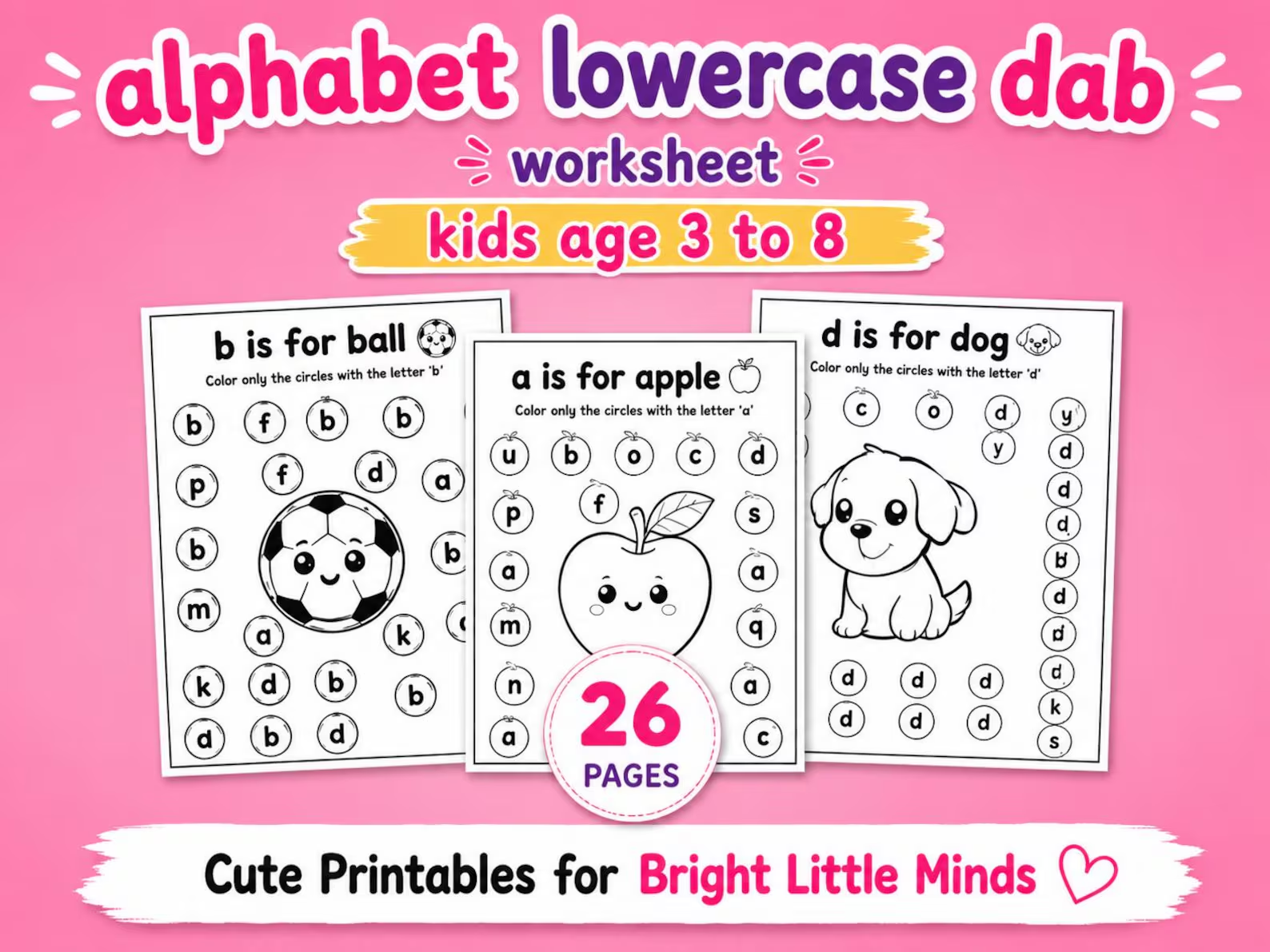
There is also a fine motor bonus. Many lowercase letters are made with curves and soft strokes — think a, d, e, g — which are excellent practice for the small hand muscles that handwriting depends on. Alphabet Lowercase Dab Worksheets for Preschool & Kindergarten Kids | ABC Dot Marker Printable | Letter Find | A-Z ABC Alphabet | PDF turns that practice into something that feels like art instead of work.
Dot Markers Are the Secret to Sticky Learning
Before you reach for a pencil, reach for a dot marker. Dot markers (also called bingo dabbers) are thick, easy-to-grip markers that leave a perfect round dot of color. For a preschooler, dabbing inside the shape of a lowercase letter is satisfying, low-pressure, and gloriously colorful in exactly the right way.
Why do they work so well for letter recognition?
- They build a motor memory of the letter shape — the hand learns the form while the eye studies it.
- They remove the fear of getting it wrong. There is no right or wrong place to dab, only the satisfying pop of ink.
- They keep small hands busy, which is exactly what a wiggly three-year-old needs.
- They are washable, cheap, and easy for tiny fingers to grip without frustration.
The Right Order to Teach Lowercase Letters
Start with the curly letters and let your child get comfortable with the most common lowercase shape first. Pair each new letter with plenty of dabbing practice, then layer in the next group. Within a month, most children can recognize the entire lowercase alphabet when they learn it this way.
| Letter group | Lowercase letters | Why they go together |
|---|---|---|
| Curly starts | c, o, a, d, e, g, q | All begin with a curl; one skill builds them all |
| Lines and circles | b, p, h, l, m, n | Straight strokes plus one curved part |
| Diagonal letters | k, v, w, x, y, z | Built from slanted lines |
| Tall and tricky | i, j, t, f, r, s | Details that fast learners often skip |
| The straight shooters | l, t, i, j, f | Great confidence boosters to end with |
How to Run a Dabbing Session That Does Not End in Tears
The goal of a letter practice session is not to finish the page. It is to have your child study, trace, and name the letter while they are still having fun. That means keeping sessions short, predictable, and proudly imperfect.
- Start with five minutes and stop while it is still fun. You can always do another page tomorrow.
- Name the letter out loud before the first dab and again when the page is done.
- Let your child choose the marker color — a tiny choice creates a big feeling of ownership.
- Praise the effort, not the neatness: "You found every round dot!" beats "Your dabbing is so tidy."
- Keep the finished pages. Looking back at a growing pile of dabbled letters is a powerful confidence boost.
Five Dabbing Activities That Teach Without a Worksheet
Worksheets are wonderful, but a kitchen table full of just-in-time activities can be even better. Try these ideas alongside your printable pack.
- Dab the fridge. Write lowercase letters on paper plates, stick them to the fridge, and call out a letter for your child to dab as fast as they can.
- Letter hunt in books. Pick any picture book and hunt for the day's letter on each page.
- Salt tray tracing. A shallow tray of salt and a finger is the ultimate zero-print pre-writing activity.
- Play-doh letters. Roll snakes and bend them into lowercase shapes — kneading builds hand strength too.
- Matching game. Lay out dabbled letters and match each one to the same letter printed on a card.
Common Mistakes Parents Make (and the Easy Fix)
Most struggles with lowercase letters come from the way we present them, not from the child. Here are the usual suspects and the simple fixes.
| Mistake | The fix |
|---|---|
| Teaching A–Z in order | Group letters by shape instead |
| Only practicing uppercase | Add lowercase practice early, even alongside capitals |
| Correcting every dab | Let mistakes be free — the goal is exposure, not perfection |
| Long daily drills | Short, fun, five-minute bursts five days a week beat one long session |
| Skipping the "tricky" letters | Spend extra time on b/d and p/q with slow, deliberate practice |
When to Move On to Letter Sounds
Letter recognition is the first stop on the reading journey; letter sounds are the second. Once your child can reliably name the lowercase letters they see (even if slowly), you can begin pairing each letter with its most common sound.
Try the "sound of the day" approach: pick one lowercase letter, dab it on an Alphabet page in the morning, then spend the day hunting for things that start with that sound — s for socks, sandwich, sun. You will be amazed how quickly recognition turns into the beginnings of reading.
And remember: every child moves at their own pace. The child who takes an extra month with lowercase letters is not behind. They are building the foundation that the rest of literacy stands on — one satisfying dab at a time.
Frequently Asked Questions
What age should a child learn lowercase letters?
Most children are ready to start lowercase letter recognition between the ages of three and four. Some pick it up at two and a half; others need to be closer to five. The best signal is interest — if your child is curious about letters in books and signs, it is the right time to start with short, playful sessions.
Should I teach uppercase or lowercase letters first?
Either order can work, but many early literacy experts recommend introducing both side by side from the start, since books are written mostly in lowercase. If you want a single starting point, begin with the uppercase letters your child already knows, then immediately connect each one to its lowercase partner.
Are dot markers better than pencils for learning letters?
For letter recognition, yes. Dot markers build a sensory and motor memory of the letter shape without demanding the fine motor control a pencil needs. Pencils are better reserved for a later stage when your child is ready for actual handwriting practice.
How do I help a child who mixes up b and d?
This is completely normal and usually resolves with time and practice. Slow down, use one letter at a time, and give a memory anchor like "b has a belly in front, d has a back first." Gentle repetition with dot marker pages and tracing is far more effective than correction.
How long should letter practice last each day?
Five to ten minutes a day is plenty for a preschooler. Consistency beats length every time. A quick, cheerful dabbing session before lunch is worth more than a long drill that leaves your child tired and frustrated.
The Bottom Line
Lowercase letters are the door into reading, and dot markers are the friendliest key you will ever find. With a short daily routine, a shape-based teaching order, and a few playful activities, your child can go from "that big one" to confidently naming all twenty-six lowercase letters.
Ready to start? Grab the Alphabet Lowercase Dab Worksheets for Preschool & Kindergarten Kids | ABC Dot Marker Printable | Letter Find | A-Z ABC Alphabet | PDF set — twenty-six cute, kid-friendly lowercase dab pages — and turn your child's first reading steps into a rainbow of dots.
Related Reads
Keep exploring with these helpful guides: