Toddlers are shape machines. Before they can say the word "circle," they can sort one, stack one, and hand you the round one every single time. A one-year-old fitting a shape into a sorter is doing real geometry — they just do not know it yet.
The secret to shapes with toddlers is to let the shapes do the teaching and keep your own agenda light. Here is what toddlers can actually learn about shapes, the activities that build it naturally, and when printable worksheets become worth introducing.
What Toddlers Actually Understand About Shapes
A toddler's shape knowledge develops in stages, and knowing the stages prevents a lot of frustration. First comes sorting by feel — matching a shape to its hole without naming it. Then comes matching — putting the same shape together on a page. Naming comes last, often well after the visual skill is solid.
So for a two-year-old, the goal is not "say the word triangle." The goal is "put the triangle with the triangle." The language follows the concept, and it always feels effortless when you let it arrive that way.
Three Shape Activities That Work for Toddlers
Toddlers need activities with instant feedback, big pieces, and zero waiting. These three fit the bill.
- Shape sorters — the classic for a reason. Praise the matching, name the shape lightly as it goes in.
- Shape sensory bin — bury foam or wooden shapes in rice; dig out two circles, then two squares.
- Shape footprint hunt — cut shapes from paper, tape them to the floor, and stomp the circle.
Shape Matching Games You Can Set Up in Minutes
Matching is the sweet spot for toddler shape learning. It is challenging enough to engage and simple enough to win.
- Match shape to outline — place a foam shape on its drawn shadow.
- Kitchen matching — match a cookie cutter to the shape it prints.
- Sock shape pairs — fold pairs of socks into balls and triangles, then match them up.
- Shape board book hunt — find each shape in a shape board book.
- Draw one, find one — draw a circle, then find three round things.
When to Introduce Shape Worksheets
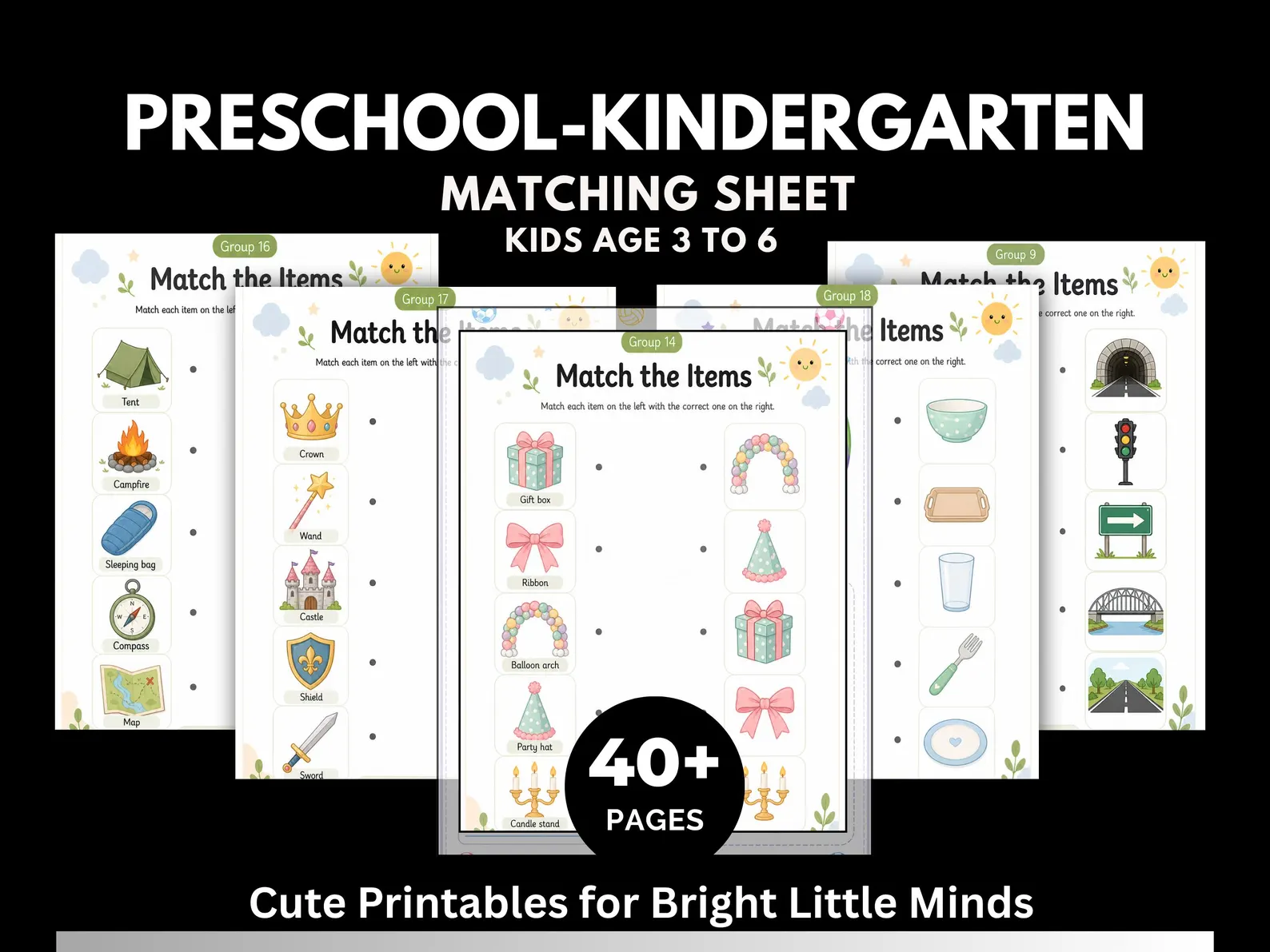
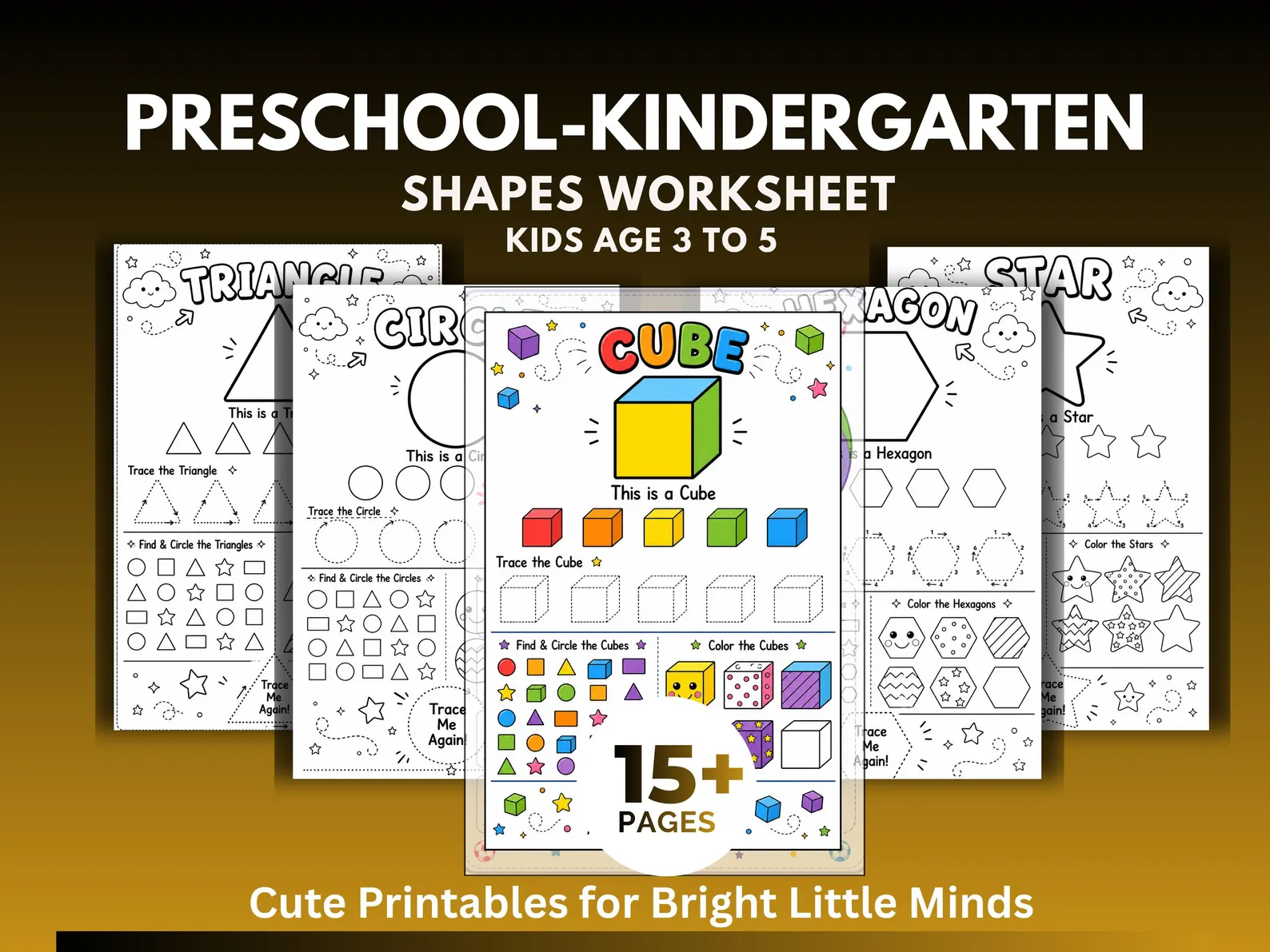
Toddlers can absolutely use worksheets — in the right form. Look for pages with big shapes, simple tasks, and no reading required. A tracing page with giant dashed circles or a matching page where a child draws a line from circle to circle is perfect. The Preschool Shapes Worksheets For Kids, Shape Recognition Activities, Kindergarten Math Worksheets, Fine Motor Skills set works well from around age two and up, especially the matching pages.
Keep toddler worksheet time to five minutes, and always pair it with a hands-on activity. A toddler should never feel "assigned" a worksheet — it is just one more toy that happens to be paper.
The Parent's Role: Less Teaching, More Narrating
With toddlers, your biggest job is to narrate what they are already doing. When your child hands you the round block, say "Yes — that one is a circle!" When they stack the square onto the square, name it. This simple labeling dramatically accelerates shape vocabulary without any formal teaching at all.
Keep your questions open and your corrections light. Instead of "no, that's not a square," try "let's find the square together." The confidence you protect is worth more than any single right answer.
When Toddlers Are Ready for More
Around age three, most toddlers can name the basic shapes, sort them, and match them on a page. That is the moment to stretch: compare sizes, count sides, draw shapes with play-doh, and meet new shapes like hexagons and diamonds. The skills your toddler built in the shape-sorting stage are the same ones that power the preschool geometry ahead.
Browse the Early Learning hub and the Preschool Learning collection for the next stage of shape play.
Frequently Asked Questions
At what age can toddlers start learning shapes?
From around age one, toddlers can match shapes by feel in sorters. By two, most can match identical shapes side by side, and by three, many can name the basic ones. Follow your child's interest — shape play should always feel like play.
Should I use worksheets with a toddler?
In moderation, yes — as long as the pages are simple, big, and fun, and the session stays under five minutes. Worksheets work best when paired with hands-on play so the paper activity reinforces a real-world concept rather than standing alone.
What shapes should a toddler learn first?
Circle, square, and triangle first — they are the most common and most distinct. Add rectangle and oval next, then stars, hearts, and diamonds. Leave the "gon" shapes and 3-D shapes for the preschool years.
How do I know if my toddler is behind in shape recognition?
Development varies widely at this age, so compare against age-typical milestones rather than peers: matching shapes by about 24 months and naming a few by 36 months is typical. If you have concerns, chat with your pediatrician — early support works well.
How long should shape activities last for a toddler?
Three to ten minutes at most. Toddler attention is short by design, and short bursts repeated across the day build skills far better than one long session. Stop while it is still fun and you will both want to do it again.
The Bottom Line
Toddlers are natural shape scientists, and your job is simply to join them in the lab. Match, sort, name, and celebrate — then let worksheets gently extend the play when your child shows interest.
The Preschool Shapes Worksheets For Kids, Shape Recognition Activities, Kindergarten Math Worksheets, Fine Motor Skills pack provides big, simple shape pages perfect for the two-and-up crowd, giving you a smooth bridge from shape-sorting play to real paper-and-pencil learning.
Related Reads
Keep exploring with these helpful guides: