If you have one preschooler and one dot marker, you technically have everything you need for a month of learning. It sounds too good to be true, but the humble dot marker — that fat, washable, ink-popping dabber — might be the single most versatile tool in early childhood education.
Dot markers work because they meet children exactly where they are. They are big enough for tiny hands to grip, forgiving enough that mistakes cost nothing, and colorful enough that learning never feels like school. Below are twenty-five dot marker activities sorted by skill, from pure fun to letters, numbers, shapes, and the fine motor control that prepares little hands for writing.
Why Dot Markers Are the Ultimate Preschool Tool
Before the activities, a quick defense of the tool. Dot markers (also called bingo dabbers or dot painters) are self-contained ink pads on a fat handle. A child presses down, and a perfectly round dot appears. No drips, no cap fights, no pressure on the page — just satisfying, repeatable circles of color.
What they build, in order of importance: fine motor strength in the hand and fingers, hand-eye coordination, color recognition, and the confidence to make marks on paper. Everything a child does before they write is practice for writing, and dabbing is some of the best practice there is.
Pure Fun: Dot Marker Activities With No Learning Agenda
Sometimes a dot marker should just be fun. These activities build motor skills while looking like nothing more than play.
- Free dab art — a blank paper and permission to cover it in dots.
- Dot rainbows — seven rows of dots in rainbow order, top to bottom.
- Dab and count — call out a number and dab that many dots in a row.
- Design your own paper plate — dot patterns around the rim.
- Secret picture — parent dots a shape in one color, child fills in around it.
- Dot fireworks — small dots radiating out from a center point.
- Raindrop race — two children race to dot a row of paper clouds.
- Dabble the dot monster — draw a monster, then cover it in dots.
Letters: Turning Dabs Into the Alphabet
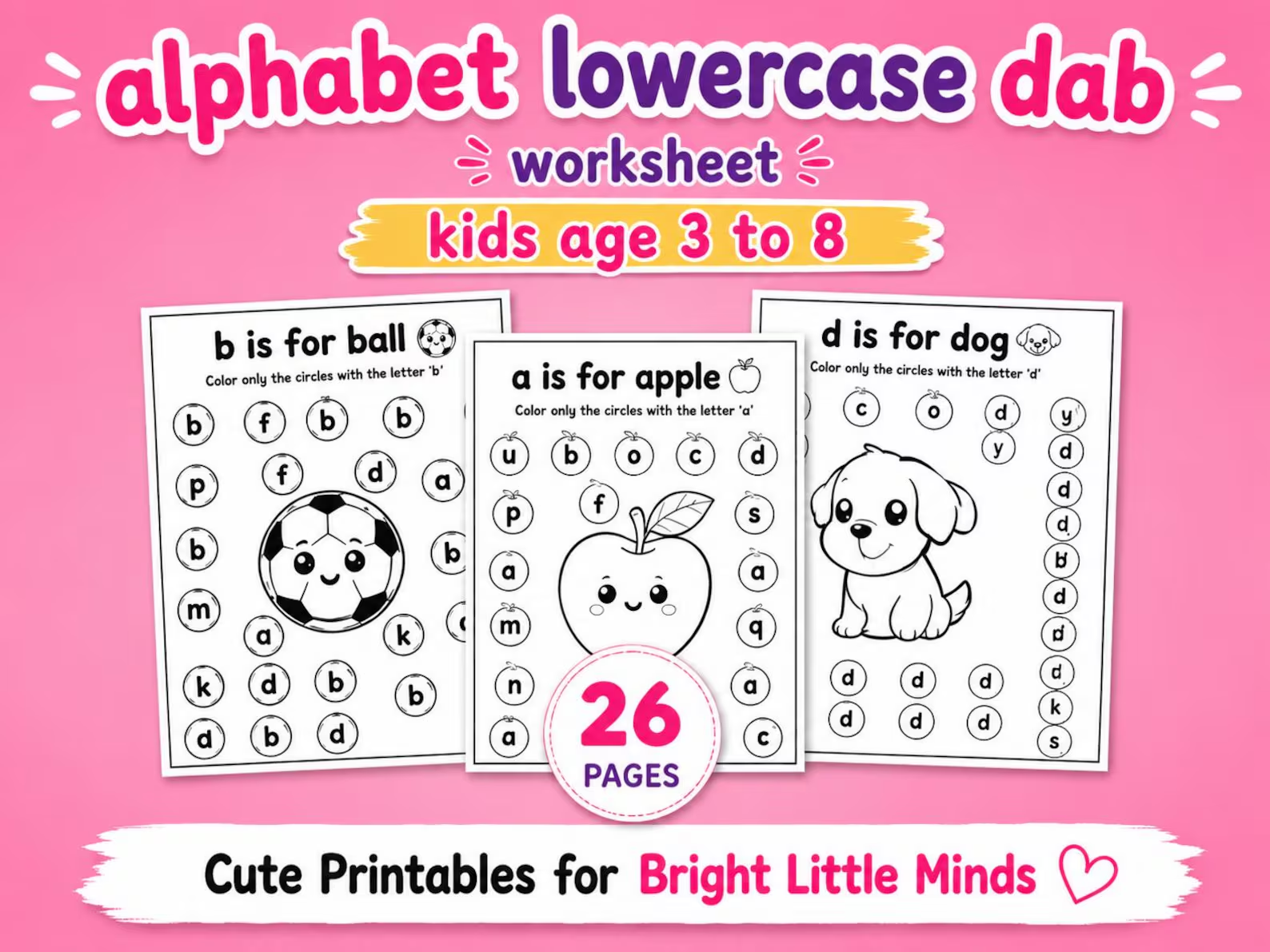
This is where dot markers earn their keep. A dabbing worksheet gives a child a letter outline made of dots — or a letter with a dotted interior — and asks them to fill it in. The result is letter recognition and motor memory in one activity.
For a ready-made version, the Alphabet Lowercase Dab Worksheets for Preschool & Kindergarten Kids | ABC Dot Marker Printable | Letter Find | A-Z ABC Alphabet | PDF set gives you all twenty-six lowercase letters with cute, kid-friendly illustrations. Use it alongside these ideas.
- Dot the letter, name the letter — dab inside the outline while saying it out loud.
- Letter sound dots — dab one dot for each word that starts with the letter.
- Upper and lower match — dot the lowercase partner of an uppercase letter you call out.
- Name letter hunt — hunt for the letters in your child's name across a row of options.
- Dot your name — arrange letter dab pages to spell out the child's name.
Numbers and Counting: Math With a Rainbow
Dot markers turn counting into something you can see and touch. When a child dabs three dots, they did not just recite a number — they made three dots exist in the world.
- Dab the right number — show a numeral, dab that many dots.
- Ten-frame dabbing — fill ten squares to show numbers up to ten.
- Dot counting strips — a row of dots from one to ten, counting aloud as you go.
- Number bond dots — dab two groups, then count them together.
- Dice doubling — roll a die, dab the dots it shows.
- Pattern dabbers — red, blue, red, blue around a circle, then predict the next.
Shapes and Lines: Geometry You Can Feel
Dots along a shape's outline build an understanding of shape that tracing on paper cannot match. The child is actively placing the corners themselves.
- Dot the outline — follow the dashed outline of a circle, square, or triangle.
- Connect the dots — a giant dot-dot-dot outline revealed only as you connect.
- Dot sides — one color of dots on the straight sides, another on the corners.
- Shape sorting — dab every circle on the page red and every square blue.
- Big vs. small — dab the big shape with big dots, the small shape with small dots.
Fine Motor Mastery: Getting Ready to Write
A child needs strong hand muscles before a pencil feels good. These activities specifically target the grip and wrist control that handwriting demands.
| Activity | Skill it builds |
|---|---|
| Dabbing inside tiny dots | Precision and pressure control |
| Alternating two hands | Bilateral coordination |
| Holding the marker upright | A pencil-friendly grip |
| Staying in a narrow path | Line control and restraint |
| Dabbing left to right | Directionality for reading and writing |
How to Keep Dot Marker Sessions Mess-Free
Washable ink is a lifesaver, but a few habits make cleanup even easier. Protect the table with a wipeable mat or old newspaper. Keep a damp cloth nearby for fingers and elbows. Cap markers immediately when a child is done — dot marker caps get lost with astonishing speed. And if a dot lands on clothing, rinse it with cold water before it sets.
Above all, remember the golden rule of preschool activities: the moment it stops being fun, stop. A dabbed letter done happily beats a perfect page done resentfully. Preschool Learning is built on joy first, skills second — and dot markers deliver both in every single dot.
Frequently Asked Questions
What age are dot markers appropriate for?
Dot markers are generally safe and fun from around 18 months to 2 years for simple dabbing (always supervised), and truly useful for structured learning from about age 3. They are designed to be too large to swallow and use washable ink, but adult supervision is still important.
Are dot markers washable?
Most dot markers sold for children use washable ink that comes out of skin, tables, and most fabrics with cold water. Always check the packaging, and protect clothing with an apron or old shirt during sessions.
How is a dot marker different from a bingo dabber?
They are essentially the same tool. "Dot markers" and "bingo dabbers" both use a sponge tip that releases ink in a round dot. Children's dot markers are usually smaller, with washable, nontoxic ink and caps for storage.
Can I make my own dot marker worksheets?
Yes. Draw a large letter or shape outline with a thick marker, then dot the interior yourself, or draw dashed circles along the outline for your child to fill in. A printable pack like the dab worksheets simply saves you the drawing time.
Do dot markers help with handwriting?
Indirectly, yes, and quite powerfully. Dabbing strengthens the small hand muscles, improves grip, and practices precision and pressure control — all prerequisites for comfortable pencil work. It is genuinely valuable pre-writing practice, not just fun.
The Bottom Line
Dot markers are the rare tool that is as educational as it is fun. With letters, numbers, shapes, and fine motor games all possible from a single tool, they are the easiest way to add meaningful preschool learning to an ordinary day.
If you want a ready-made starting point, the Alphabet Lowercase Dab Worksheets for Preschool & Kindergarten Kids | ABC Dot Marker Printable | Letter Find | A-Z ABC Alphabet | PDF pack gives you twenty-six cute, printable lowercase dab pages your child can work through one rainbow dot at a time.
Related Reads
Keep exploring with these helpful guides: