Long before a child can count or name a single letter, they are already thinking in shapes. A toddler points to a ball and calls it round; a three-year-old fits the triangle into the shape sorter with unerring confidence. Geometry is, in many ways, the first math a child ever does.
Teaching shapes deliberately — in the right order, with the right activities — builds visual discrimination, early math vocabulary, and the spatial reasoning that later geometry and even reading depend on. Here is the full playbook.
Why Shape Learning Matters So Early
Shapes are the alphabet of the visual world. Learning to recognize a triangle sharpens the same visual discrimination skills that let a child tell a b from a d or an 8 from a 9. Shape recognition is literally a reading-readiness skill.
Shapes are also the gateway to math language: sides, corners, curves, bigger, smaller, same, different. Every shape conversation is a vocabulary lesson wearing a geometry costume.
The Right Order to Teach Shapes
Shapes, like letters, have an optimal teaching order. Start with the shapes that are most visually distinct and work toward the look-alikes.
| Stage | Shapes | Why this order |
|---|---|---|
| Stage 1 | Circle, square, triangle | The three most common, most distinct |
| Stage 2 | Rectangle, oval | Easy extensions of square and circle |
| Stage 3 | Star, heart, diamond | Fun, high-engagement shapes |
| Stage 4 | Hexagon, pentagon, octagon | Counting sides builds number skills too |
| Stage 5 | Cone, cube, sphere | Moving from flat to 3-D shapes |
Five Shape Games That Make Learning Stick
Recognition builds fastest through play that shows shapes in context, not just on a page. Rotate these favorites.
- Shape hunt — find every circle in the kitchen, every triangle in the car.
- Shape hop — jump onto the called-out shape on the floor.
- Shape sort — sort a mixed pile of everyday objects by shape.
- Shape Simon Says — "Simon says find something square."
- Shape scavenger hunt — a checklist of shapes to find around the house.
Making Shapes With Everything
Shapes do not have to come from worksheets. They are hiding in every material you already own.
- Build shapes with play-doh snakes, craft sticks, and pipe cleaners.
- Draw shapes with chalk, then walk along the outline.
- Cut shapes from paper and arrange them into pictures.
- Stamp shapes with kitchen cookie cutters and paint.
- Trace shapes around household objects — a cup is a circle, a book is a rectangle.
How to Use Shape Worksheets Effectively
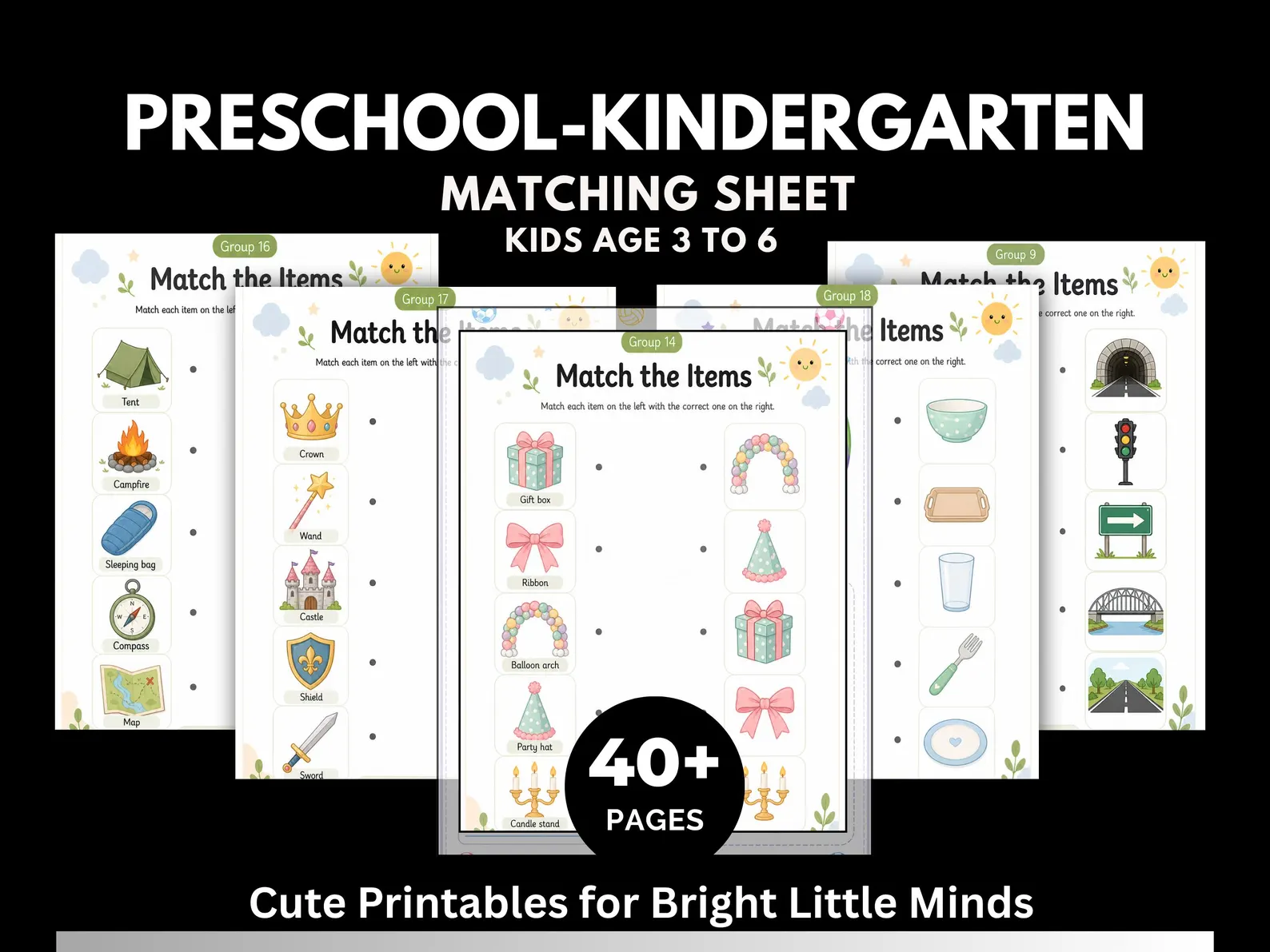
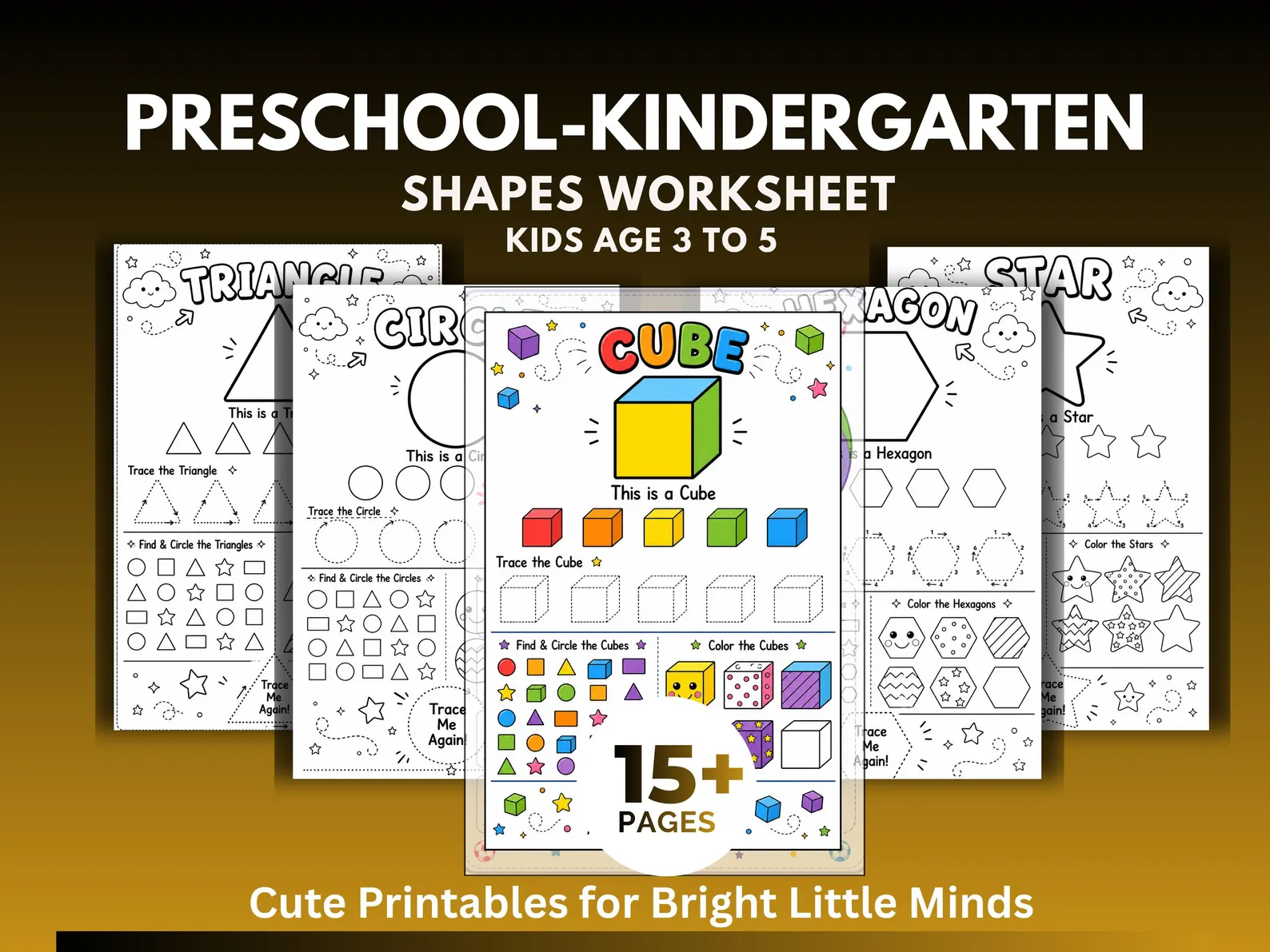
Shape worksheets are the bridge between recognizing a shape in the wild and being able to name, describe, and reproduce it. Used well, they build focus and visual discrimination. The Preschool Shapes Worksheets For Kids, Shape Recognition Activities, Kindergarten Math Worksheets, Fine Motor Skills set pairs shape recognition with matching and fine motor practice.
- Name the shape before you start — say it out loud, count its sides.
- Trace the shape with a finger first, then with the writing tool.
- Compare: how is this square different from that rectangle?
- Color it after you finish — it becomes the reward.
- Cut the finished page into shape cards to play with later.
From 2-D to 3-D Shapes
Around age four or five, children are ready to meet three-dimensional shapes. This is a big conceptual leap, and it is best bridged with real objects: a ball is a sphere, a box is a cube, a party hat is a cone. Pairing the flat shape on paper with the real 3-D object builds the spatial reasoning that later geometry requires.
For a steady supply of shape-based practice and ideas, bookmark the Early Learning hub and the Preschool Learning collection.
Frequently Asked Questions
At what age should kids learn shapes?
Children start recognizing shapes informally around age two (fitting shapes into sorters) and can name the basic ones by age three to four. Flat shapes come first, with three-dimensional shapes typically arriving around ages four to five.
What order should I teach shapes?
Start with circle, square, and triangle — the most distinct — then add rectangle and oval, then star, heart, and diamond, then the "gon" shapes like hexagon and pentagon, and finally 3-D shapes. Teaching similar shapes far apart prevents confusion.
How is shape recognition related to reading?
Recognizing shapes trains visual discrimination — noticing the differences between similar forms. That same skill lets children tell apart look-alike letters like b/d/p/q and 8/9. Shape learning genuinely supports early reading.
Should I teach shapes with worksheets or real objects?
Both, in the right order. Real objects build the concept ("this cup is a circle"), while worksheets build the recognition and focus needed for paper-and-pencil work. Hands-on first, printable to consolidate.
Do shape worksheets help with other skills?
Yes. Quality shape worksheets bundle several skills: shape recognition, fine motor control for tracing and matching, color practice, and often counting sides and corners — turning geometry into a full early-learning workout.
The Bottom Line
Shapes are the first geometry and a hidden literacy skill. Teach them in the right order, anchor them in real objects and play, and use worksheets to turn recognition into confident naming and describing.
The Preschool Shapes Worksheets For Kids, Shape Recognition Activities, Kindergarten Math Worksheets, Fine Motor Skills pack gives you fifteen-plus printable pages of shape recognition, matching, and fine motor practice — a ready-made next step whenever your child is ready for paper-and-pencil shape work.
Related Reads
Keep exploring with these helpful guides: