Show a preschooler a page of cute kawaii animals and watch what happens: they light up, reach for the crayons, and settle in with a focus that no worksheet can match. Animal coloring pages hold a special power — the subject is instantly lovable, which means the activity runs itself.
But cute animal pages are not just fun. They carry all the classic coloring benefits — fine motor development, focus, and calm — plus a bonus: a ready-made conversation starter for vocabulary, colors, and even early science. Here is how to make the most of them.
Why Animals Are the Perfect Coloring Subject for Kids
Children are wired to love animals, and kawaii-style animals double that effect with big eyes, round shapes, and soft proportions. Because the subject is lovable, children color longer, press more carefully, and return to the page again — all of which deepens the fine motor and focus benefits.
There is also a vocabulary payoff. Every animal page is a chance to name the animal, its colors, its body parts, and where it lives, turning a coloring session into a stealth language lesson.
How to Turn Animal Coloring Into Learning
These micro-conversations build vocabulary, number sense, and general knowledge while the child is happily coloring — no extra "learning time" required.
- Name the animal and its sounds ("what does a bunny say?").
- Name the colors as they are chosen ("that's a lovely teal!").
- Count the details (ears, paws, spots) while coloring them.
- Talk about the animal's home and food.
- Compare sizes: "is the mouse bigger or smaller than the bear?"
The Fine Motor Payoff (Why It Matters for Writing)
Staying inside a thick animal outline is precision work for a small hand. It builds the same grip strength, pressure control, and hand-eye coordination that handwriting needs. Cute animals make kids willing to do this practice for long stretches, which is exactly why animal pages are such a smart pre-writing tool.
Pair animal coloring with Tracing and Fine Motor Skills activities for a complete hand-development routine.
Six Animal Coloring Activities Beyond the Page
Once the page is colored, it can keep teaching.
- Cut it out and make animal puppets on sticks.
- Sort finished pages into "farm animals," "forest animals," and "sea animals."
- Create a simple story starring the colored animals.
- Glue pages into an "animal book" the child wrote (with your help).
- Match the colored animal to a toy version of the same animal.
- Re-color the same page to compare color choices and practice control.
Choosing Good Animal Coloring Pages
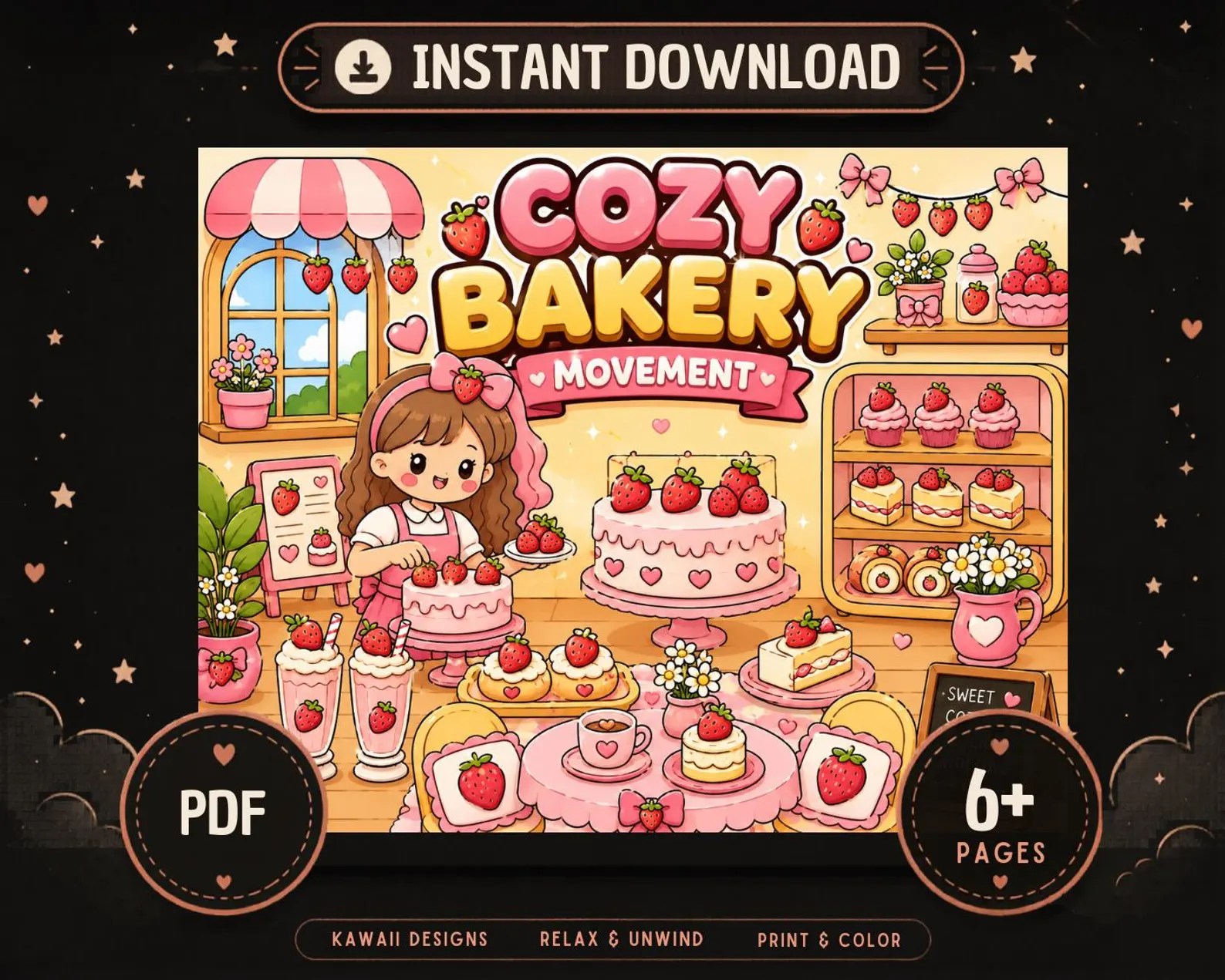
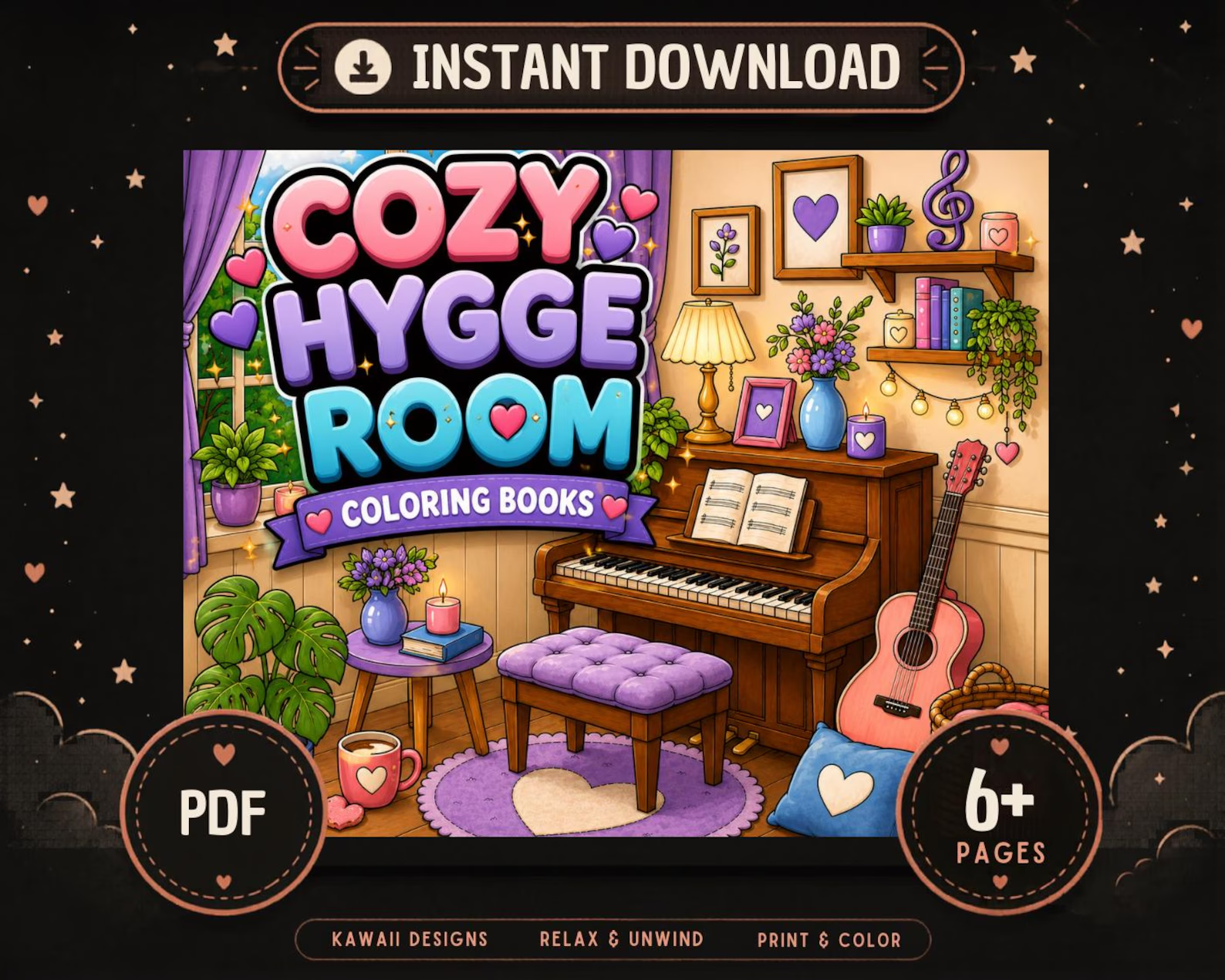
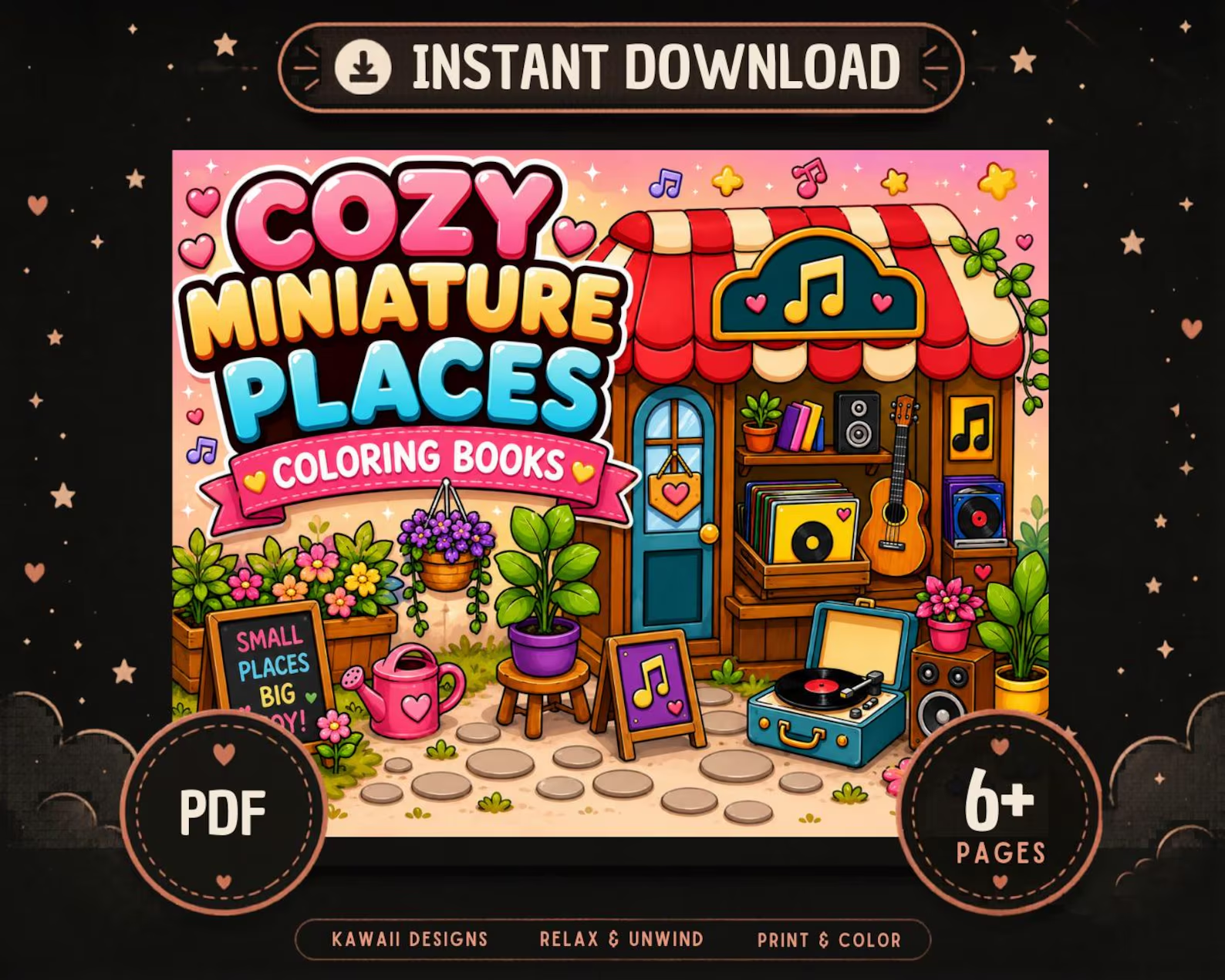
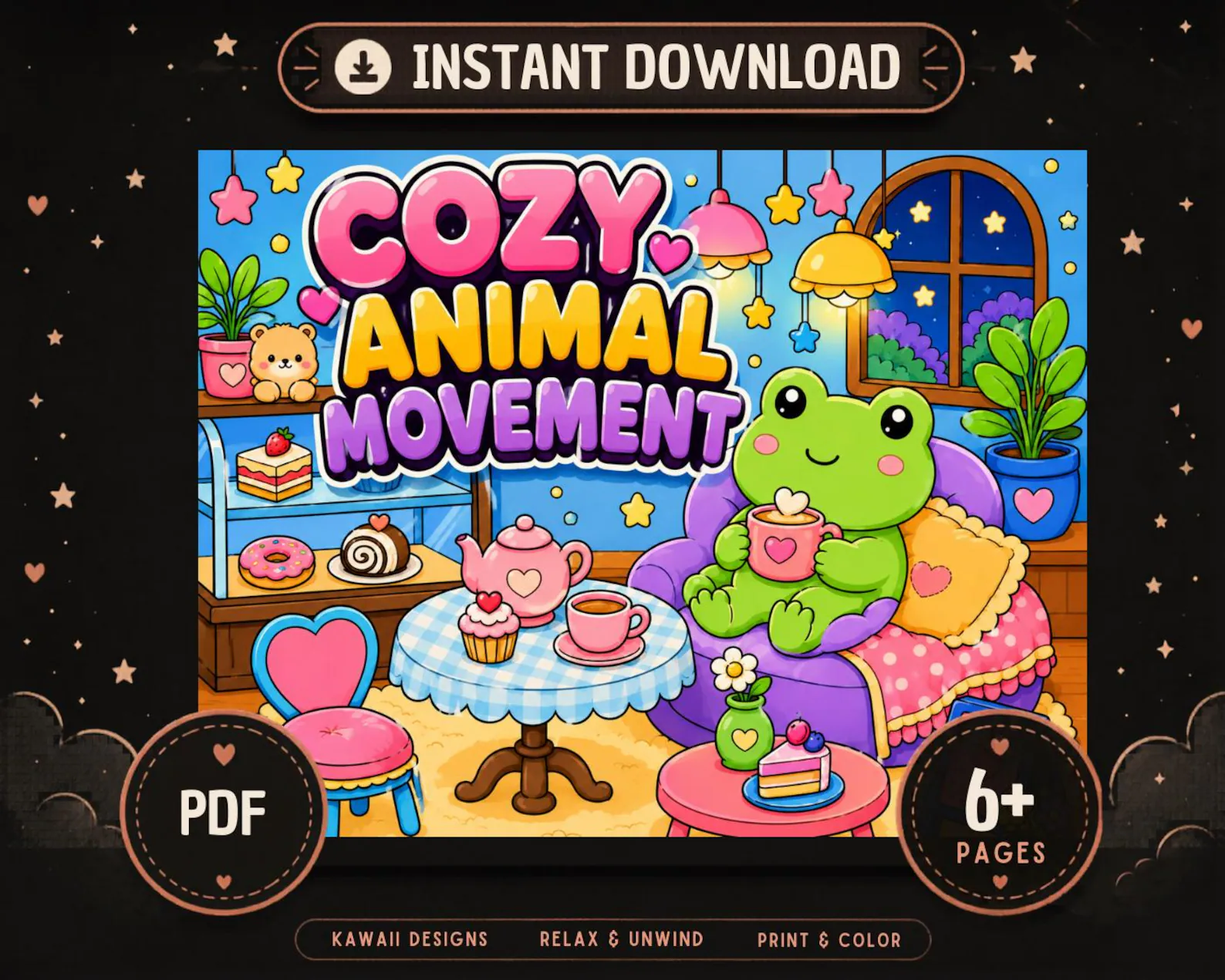
Not all animal pages are created equal. For young children, look for thick, bold outlines and large coloring spaces — frustratingly tiny details undermine the confidence the activity should build. High-resolution printing matters too, so lines stay crisp. The Cozy Animal Coloring Pages, Kawaii Hygge Scenes, Relaxing PDF (6+ Pages) set offers six high-quality kawaii animal pages designed with cozy, beginner-friendly lines.
Coloring as a Calm-Down Tool
Beyond skill, animal coloring is a reliable emotional reset. A child who is overstimulated or upset often settles dramatically within minutes of coloring something cute. Keep a small stash of animal pages on hand for the rough patches of the day — the calm it restores is worth more than any skill it builds.
For more gentle activity ideas for the early years, browse the Early Learning hub and the Coloring Books collection.
Frequently Asked Questions
At what age can kids start coloring animal pages?
Children can scribble on big animal shapes from around 18 months to 2 years, with guided coloring inside lines developing between ages two and three. Thick-outlined kawaii animal pages are ideal from age two because the bold lines make staying inside achievable.
Do animal coloring pages help with learning?
Yes. Beyond fine motor and focus benefits, they naturally spark vocabulary, colors, counting, and animal knowledge through conversation while coloring. They are one of the easiest ways to make learning feel effortless.
What makes kawaii animals different from regular coloring pages?
Kawaii (cute) style uses big heads, big eyes, round bodies, and soft proportions that trigger warm, protective responses in children. Kids find them more lovable and engaging, which means longer, more focused coloring sessions.
Should I print animal pages or use coloring books?
Printables have a big advantage: unlimited copies. A favorite animal can be printed again, colored differently, used for crafts, and shared with a sibling. Books are great for portability; printable pages are great for freedom.
How can I help my child color inside the lines?
Start with thick-outlined pages, have your child trace the outline with a finger before coloring, and let them use chunky crayons or markers that are easy to control. Praise attempts over perfection — line control develops gradually with practice.
The Bottom Line
Cute animal coloring pages are the rare activity that is simultaneously pure joy and genuine development. They build hands, calm, and vocabulary while making a child simply happy.
The Cozy Animal Coloring Pages, Kawaii Hygge Scenes, Relaxing PDF (6+ Pages) set delivers six high-resolution kawaii animal pages with cozy, beginner-friendly lines — ready to print for a rainy afternoon, a calm-down moment, or an after-school treat.
Related Reads
Keep exploring with these helpful guides: